« Glad Tidings | Main | Activating My Green Fingers, If Any »
Thursday, September 23, 2025
Smooth, Snowy Sweetness
Perhaps you may have noticed : in the last few weeks, I’ve been going through a phase of desiring, and thus indulging in, a fair bit of homey Chinese comfort foods. Maybe it’s the tremendous work pressure I’ve been under lately, but I’ve just been wanting lots of restorative, soulful foods. And being one with a sweet-tooth, more often than not the comfort foods that I crave are sweet. So I’ve been working my way through my little repertoire of traditional Chinese sweet soups or tang shui / tong shui.
This is another very simple, terribly easy to prepare, and yet highly satisfying and enjoyable tong shui…
It is deceptively simple, yet brimming with varied flavors and textures. It involves but four ingredients (at least in my version; although other stuff can and are commonly added too), of which two are among my all-time favorites – which, I suppose, makes this tong shui an automatic winner in my book. The fact that it has a myriad of purported health benefits does it no harm either in staking its claim on my heart. What a nice added bonus - to be able to indulge my desire for something sweet and, at the same time, be comforted in knowing that I’m also eating healthily. It doesn’t get much better than this!
Of course, the best thing about Chinese dessert soups is that they are not confined to being after-meal treats alone; they are eaten at all times of the day – whenever the fancy strikes… breakfast, mid-morning break, lunch, tea, supper… any time of the day is a good time for a soothingly reassuring bowl of sweet tong shui.
Very often tong shuis are seen as an useful tool to help regulate the body’s systems – either to cool them down or to warm them up, depending on the ingredients used to cook the soup. Other times, a balance between “yin” and “yang” is sought – a harmonious blend of “cooling” and “warming” foods lovingly simmered into a sweet, chunky broth.
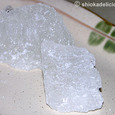
The snow ear fungus is used in both savory (as written about previously) and sweet soups. Personally, I prefer the dessert version – for obvious reasons, given my love of most things sweet. This fungus is said to be good for clearing “heaty” phlegm-filled lungs. However, a less known – and definitely less discussed – benefit of the snow ear fungus is in the... umm… shall we say “housekeeping” department. This usefulness was related to me by a Traditional Chinese Medicine (TCM) Practitioner some years back. Snow ear fungus, when slow-cooked for a fairly lengthy period of time, takes on a gelatinous texture, with a slightly slippery (some would say slimy) feel. And therein lies its secret – it works wonders in smoothing and lubricating the body’s “plumbing” system as it were, and makes things flow easily again, if you know what I mean. This is obviously not a “benefit” that gets trumpeted loudly under normal circumstances, but I’m told it’s a highly efficacious – not to mention tasty – solution to an uncomfortable problem. And hey, I think it sure beats having to imbibe copious amounts of dry, scratchy, sawdust-like bran! But enough of this already… And if you don’t suffer from said inconvenience, then snow ear fungus is also said to be wondrous for achieving a snowy, smooth complexion. So pay heed, ladies!
Along a similar vein, in terms of cooling benefits for the lungs, is the lily bulb (bai he in Mandarin). This is the scale leaf of the bulb of the Lilium plant that has been dried. When cooked, it has a very subtle and delicate sweetness, and a soft, almost nut-like texture – fairly reminiscent of the lotus seed. I adore bai he – almost more than I love lotus seeds, and I like lotus seeds a lot! While I tend to add lotus seeds to a lot of the soups I cook, especially the dessert soups, the bai he makes a less frequent appearance, for some reason or another. But that doesn’t mean I love it any less. I really enjoy its subtlety of flavor, and yet at the same time, its certain robustness of body. To read more about the lily bulb, click here and here. And to see a picture of it in its uncooked state, click here.
Of course, it goes without mention that my version of snow fungus tong shui has lots of lotus seeds (dried or fresh) in it. Some people also like to add thin slices of lotus root to the soup; though I have to confess to not being terribly keen on this combination of textures – the crunchy lotus root seems somehow disruptive to the scheme of things. But that’s just me.
The final ingredient in my tong shui is Chinese Wolfberries – for a dash of color. They also add a nice touch of natural sweetness to the soup. As mentioned before, these wolfberries are great for keeping the eyes bright and sparkling.
Alternatively, the tong shui can be lightly sweetened with dried red dates (which are more warming on the body than the wolfberries) instead. On occasions, I have also seen this sweet soup being made with dried longans added.
So really, there is a great deal of flexibility as to what goes into a tong shui. Some people choose the ingredients based on their benefits for the body or on the “imbalance” in the body systems that they are trying to “adjust”. Others choose purely according to their personal taste preferences.
The cooking process is the same as for almost all sweet soups – the ingredients requiring the longest cooking times go into the pot first ; subsequent ingredients are added in phases according to how much simmering they require ; the sugar is the last to go in.
Snow Ear Fungus Tong Shui
• Soak the snow ear fungus until softened – about 20 minutes or so. [Different batches may require different soaking times.] Rinse well under running water to remove all sand particles. Break the fungus into medium chunks (you can, like me, just use your fingers for this, or a pair of kitchen scissors).
• Check the dried lotus seeds to make sure each one has had their stems removed. De-stem those that still have the green “heart” in them. Rinse well, drain and set aside.
• In a large pot, place enough water to produce the amount of soup you want, the fungus and the dried lotus seeds. [If using fresh lotus seeds, which require a much shorter cooking time, add them later, together with the lily bulbs.] Cook on high heat until the water comes to a rolling boil. Reduce the flame to the lowest setting, and leave to simmer gently until the fungus is tender (about 2½ to 3 hours).
• In the meantime, give the wolfberries a quick rinse, drain and set aside. The lily bulbs should also be given a quick wash and drained well.
• Once the snow ear fungus have reached the desired tenderness, plop in the wolfberries and the lily bulbs. Simmer for another 20 to 30 minutes or so, or until the lily bulbs are tender.
• Add rock sugar to taste. Allow to dissolve completely before removing the soup from the heat and serving.
Shiok!
Copyright © 2004 Renee Kho. All Rights Reserved.
Please contact me for permission to copy, publish, distribute or display any of the images or text contained in this article.
05:27 PM in Comfort Food, Home Cook: Sweet Soups | Permalink
TrackBack
TrackBack URL for this entry:
http://www.typepad.com/t/trackback/1159008
Listed below are links to weblogs that reference Smooth, Snowy Sweetness:
Comments
somebody slap me quick before i start licking my computer monitor
Posted by: graceshu | September 23, 2025 06:32 PM
That looks really good. A question though - I just found lily bulbs in my local asian grocery but they are dried - are dried bulbs the type to use?
Posted by: Zara | September 23, 2025 09:17 PM
Oh, this looks so good. I can just imagine how good it would taste ice-cold from the fridge on a hot, summer day. Like you said, Shiok!
Posted by: jcheng | September 24, 2025 12:39 AM
hey Grace!
LOL!
(good to hear from you again : ))
hi Zara,
yes, the lily bulbs are dried.
if you'd like to see a picture of the dried ones before they are cooked, click on the hyperlink that says "And to see a picture of it in its uncooked state, click here" and you'll see a photo of the dried bulbs that I took.
hope that helps : )
hi jcheng,
yep! how did you guess? ; )
that is exactly how I love it... well-chilled straight from the fridge.
I'm a sinseh's nightmare I tell you... I like all my sweet soups cold!
everytime I go see the Chinese doctor she is up in arms, because I'm supposed to have a "cooler" (yin) blood system, and so should avoid cold foods as much as possible, and here I am taking all my tong shui straight from the fridge! lol.
Posted by: Renee | September 24, 2025 04:37 AM
yummylicious!
Posted by: Milk Teddie | September 24, 2025 10:01 AM
do try wid fresh lily bulbs next time :p the texture is more ermmm crunchy
Posted by: babe_kl | September 24, 2025 01:49 PM
That looks wonderful!!!! I use an ingredient called tree ear fungus, that I soak before using. I wonder if it's the same thing as snow ear fungus?
Sher
Posted by: sher | September 24, 2025 11:19 PM
That looks wonderful!!!! I use an ingredient called tree ear fungus, that I soak before using. I wonder if it's the same thing as snow ear fungus?
Sher
Posted by: sher | September 24, 2025 11:19 PM
hi milk teddie,
; D
hi babe kl,
thanks for the suggestion : )
for sweet soups, I tend to prefer the texture of the dried lily bulbs though, and usually only use the fresh ones when cooking savory dishes like stir-frying chicken etc.
just a personal quirk : )
hi sher,
is this tree ear fungus black in color?
I use something we call the wood ear fungus which is black (I normally use it to saute chicken with, and it's pretty yummy : ))
Posted by: Renee | September 26, 2025 12:05 AM
After looking at the snow ear fungus picture, I realized that it was different from the tree ear fungus that I use. Tree ear fungus is dark and I use it in things like mu shu pork. Makes me hungry just thinking about it!!!
Sher
Posted by: sher | September 26, 2025 02:22 AM
After looking at the snow ear fungus picture, I realized that it was different from the tree ear fungus that I use. Tree ear fungus is dark and I use it in things like mu shu pork. Makes me hungry just thinking about it!!!
Sher
Posted by: sher | September 26, 2025 02:23 AM
hey Sher,
that mu shu pork certainly sounds yummy!
can feel my saliva glands activating just from reading the name! : )
I think the tree ear fungus could be the same or similar to the wood ear fungus I use to saute chicken with... also a very yummy dish!
Posted by: Renee | September 28, 2025 04:58 AM
hi renee, thanks for posting this up. it's great! was inspired to share something of my own food experiences after reading this. also used one of the pics on my blog. hope it's ok. pls excuse while i wipe the drool off my keyboard, hehehe.
Posted by: pinkbean | October 20, 2025 01:42 PM
hi pinkbean,
I did a cursory scan of your blog, and am not sure which post you are referring to where you have used a picture from my blog.
I would appreciate it if you will remove the picture taken from my blog.
and if you have not posted the picture, but only hyperlinked directly to a picture on my blog, that is an even bigger NO-NO - - it eats up my bandwidth!
please kindly remove either / both the picture and / or the hyperlink.
if you would like further clarifications, please email me directly (the button is at the top right hand corner of the navigational menu bar).
Posted by: Renee | October 20, 2025 02:47 PM