« June 2004 | Main | August 2004 »
Wednesday, July 21, 2025
Going Offline
Just wanted to drop a quick note to say that this blog may be a little quiet over the next few weeks…
My uncle (father’s second brother) has just passed away, and we’re going away for the wake and funeral… and just to be with the whole family. I will then have to go on my pre-scheduled business trip, which has now had to be pushed back. So, I probably will not be able to do much, if any, updating for a short while.
Anyway, I’m off to bed… hope to catch a couple of hours of sleep before we have to head out to the airport for our early morning flight. In the meantime, take care and I’ll talk to you soon…
03:38 AM in Crumbs & Tidbits | Permalink | Comments (24) | TrackBack
Monday, July 19, 2025
Pie Therapy
A couple of weeks ago, I tried out my very first Nigella savory recipe – from HTBADG (that’s “How To Be A Domestic Goddess”, in case you are wondering  ). Buoyed by the resounding success of my Nutella birthday cake, I wanted to try her savory pie recipes to see if they were as easily successful as her sweet creations.
I chose the Supper Onion Pie. It seemed like the perfect choice for that day. I had just come home from a meeting where a deal I had been working very hard on for six months suffered a (temporary, as it turned out a few days later) setback. And it just felt rather appropriate to spend some time chopping onions. Lots and lots of onions. All 750g of onions, in fact! There was something quite therapeutic about chopping onions. One thing for sure: by the time I had prepped all the onions, I was feeling a lot better! 
Okay, so the pie is called a Supper Pie, but I made it for a late lunch. No matter. It is only semantics after all. I think any time of the day is perfect for a slice of comforting, homey pie.
I was attracted to the pie for several reasons. I love caramelized onions, especially caramelized red onions; they are meltingly tender and soft, with a gorgeous caramel-y sweetness. And this pie came with copious amounts of the stuff. Plus, the recipe used a simple-sounding scone dough for the crust. I also liked the idea of the pie being made in the fashion of an upside-down cake; the cooked-down onions on the bottom of the pan, with the uncooked crust on top, so that it got nicely golden in the oven.
I pretty much made the recipe as it was in the book. No, I lie. Would I make a recipe without tinkering with it? C’mon. Seriously. Okay, so I did do a little bit of adjustment… but only a teeny weeny bit. And only to the onions. Instead of thyme – of which I had none on hand, be it fresh or dried – I used fresh chopped coriander (which I happen to absolutely adore). I also had no strong Cheddar or any other strong cheese in the fridge (this was hardly a pre-planned baking session after all). So, I settled for regular Cheddar. And oh, I also could not resist deglazing the pan with a little bit of wine, which the recipe did not call for.
The scone dough, however, was made exactly as the recipe requested. (I do obey instructions at least some of the time. )
And the pie came out looking gorgeous.

The crust was nicely golden, and covered with a luscious, thick cushiony layer of beautifully aromatic onions.

The onions tasted very good – but that’s because I like onions a lot. This was definitely not a pie for the onion non-lover that was for sure. It was more of a simple, two-note kind of a pie – with just onions and crust being the dominant players in terms of flavors and textures; there was little else for contrast.
I was somewhat disappointed with the texture of the crust. I’m not sure what I was expecting exactly, but the idea of a “scone dough” conjured up images of a slightly dense, yet still very tender crumb. This pastry was not only rather dense, but a little chewy and almost “dough-y” in bite. I really couldn’t say I had much enthusiasm for the crust at all. And I’m just wondering (as I know there are a lot of bakers amongst you who bake faithfully from Nigella’s recipes), has anyone made this pie before? Did you get the same result for the crust? Or did yours come out completely differently? I would love to find out. And maybe to try the crust again.
On balance, the pie was pretty good; but somehow not quite worth the effort. Sure, it was probably easier to put together than a regular pie that had a dough which needed to rest and then be rolled out. Yet, this was hardly a quick thing to serve up. From start to finish, it took almost 1½ hours (½ hour prepping, ½ hour cooking the onions, ½ hour baking) before this baby was on the table. I could have made fried rice or a simple pasta dish; grilled salmon over noodles or even a couple of stir-fried dishes served with rice in that amount of time or less. Please don’t get me wrong; this was by no means a “bad” recipe. I guess, for me personally, the results just weren’t exciting enough to warrant spending that amount of time in the kitchen.
Having said all that, I would still love to find a Nigella savory baking recipe to try out and fall in love with. So, I would welcome some recommendations; if you have had any wondrous experiences with any of her recipes, please, please let me know. 
Copyright © 2004 Renee Kho. All Rights Reserved.
Please contact me for permission to copy, publish, distribute or display any of the images or text contained in this article.
06:53 PM in Home Cook: Savory Pies | Permalink | Comments (11) | TrackBack
Sunday, July 18, 2025
IMBB 6: Char Siew – Chinese Sweet Barbecued Pork

Char siew needs little introduction. If there is one Chinese food item that is universally recognized the world over by its Chinese name, it is probably this succulent, slightly sweet meat. Char siew (sometimes spelt char siu) is not only eaten as is, with noodles or rice, but is also an integral ingredient in many popular Chinese food items like char siew pau (BBQ pork steamed buns) or char siew sou (baked flakey pastry filled with BBQ pork). It is also a great addition when cooking dishes like fried rice and fried noodles or rice vermicelli (beehoon).
Many other Asian cultures, such as the Japanese and Koreans, also have their own versions of this Chinese sweet pork.
While char siew quite obviously does not qualify under the “grilled” food category (i.e. foods cooked quickly over very high heat – think burgers and steaks), it probably does fall quite well under the “barbecued” classification – except perhaps for one small technicality. Barbecuing, as I understand it, involves long and slow cooking at relatively low temperatures in an enclosed cooking environment.
Traditionally, char siew was made by hanging marinated strips of pork in enclosed clay or brick ovens, heated either by wood or charcoal, and slowly cooked to tender and moist perfection. Although in modern times, these clay ovens have been replaced by circular steel “drums”, the strips of pork are still cooked whilst hung from ‘S’ hooks on the sides of these modern cookers, which are fully enclosed to simulate the heat environment of the ancient ovens. (However, more often than not, for practical reasons, most commercial producers use gas to fire these steel cookers; although there are still a few purists who stick faithfully to charcoal.)
So, for all intents of purposes it can be said that char siew is barbecued (as its English name quite obviously suggests). The only technical hitch is the cooking time. “Real” barbecued meats, like barbecued ribs (in the American sense), are cooked for many, many long hours – usually between 12-15 hours – on low, indirect heat. In that sense, char siew is different, being cooked as it is for a fairly short period of time, at moderate temperatures. But hey, I’m not about to quibble over small differences of a few hours of cooking time or a few degrees of temperature. And so, my contribution for this month’s IMBB theme of “Barbecuing and Grilling” is char siew…
The key to good char siew is not so much in the cooking (although that is of course important in terms of getting the right tenderness and moistness); the critical factor is the marinade. And trying to track down a credible char siew recipe for this project was a task in itself. Even asking several aunts if they had tried-and-tested recipes drew an unusual and disappointing blank. Of course, a quick Google on the Internet revealed a plethora of recipes. However, a closer look also showed glaringly that most of these recipes were, shall we just politely say, highly modified versions. So many of them had "surprising" ingredients for a char siew marinade… the popular route seemed to be to put together several ingredients that were deemed to be “essentially” Chinese, such as five spice powder, yellow bean paste, oyster sauce or other such like – ingredients that I personally have not tasted in all the various char siew I have eaten.
In the end, I decided to take an idea from here, use another suggestion from there, incorporate my own history of taste experiences of store-bought char siew, top it with some advice from mum and an aunt, and came up with a customized marinade recipe. And it was deeply satisfying that the result came out tasting very char siew-like indeed, as all the “tasters” (aka family members) enthusiastically declared.
First though, a few notes about the ingredients…
• The cut of pork used in char siew: According to my butcher, most commercially sold char siew are made from either shoulder or leg meat, because these cuts have the right amount of fat and are more intensely flavored. A lot of the recipes I saw on the Internet use tenderloin instead; some simply use the loin. For “research” purposes, I made the char siew using both the shoulder and the tenderloin. The result? The tenderloin produced a very tender and lean char siew, but also a less moist one. The small amount of fat in the shoulder cut, on the other hand, imparted a wonderfully luscious mouth-feel to the char siew, and gave it the all-important, requisite slightly charred, crispy bits in certain parts. The shoulder cut also had deeper flavors and a meatier bite. Both cuts of meat would work; it’s pretty much down to personal preference. Personally, I would go with the shoulder for the flavor and texture.
• If using the shoulder, have the butcher trim the meat into one long strip (the piece of meat on the left in the picture  ).
).
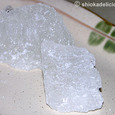
• Maltose  is used in the marinade of all store-bought char siew. However, this did not appear as an ingredient in a single recipe that I saw on the Internet, or indeed in most cookbooks. Almost all the recipes list honey instead. Before this project, I had never worked with maltose before; and would have imagined that it was fairly interchangeable with honey. After having worked with maltose, I would say that it is very different from honey, and the results it gives are rather different too. Maltose is rather hard and extremely sticky and gooey. It gives a certain viscosity to the marinade, and more importantly, it imparts a high gloss and shine to the meat, which is also an important part of the appeal of char siew. And unlike honey, when cooked, it has a less sticky feel to it. The sweetness of maltose is also different from that of honey. I personally feel that maltose is quite an integral part of the char siew marinade. However, if it is unavailable, I think honey does make for an acceptable substitution.
• The most common type of char siew seen around the world is the red colored version. In Singapore and Hong Kong, there is also the dark brown variety – char siew made without the use of any food coloring. I actually prefer the latter. However, for camera aesthetics purposes, I decided to use red food color to make the char siew; and I have to admit it does add a certain appeal to the meat. Usually powdered food coloring  is used – the same type that is commonly used to color First Full Moon red-dyed hard-boiled eggs or birthday longevity peach buns. In Asia, they are commonly sold in Chinese medical halls; outside Asia, they should be available at large Asian grocers. If unavailable, I would think that regular liquid food coloring would work equally well.
I have not included an exact quantity for the food color in the recipe, as this will vary depending on the brand of food color used, its pigment intensity and of course, personal preference as to how red you want the meat to be. It is highly advisable to add the color in small increments; the color can tip very quickly and easily from something that is nicely red to one that is an eery alien red (as I discovered). Also keep in mind that because of the dark soy sauce in the marinade, the sauce will look less red than it actually is. The meat will cook out to a brighter and more obvious red than what the marinade may suggest. [I ended up using a combination of two colors: Sunset Yellow which is actually red with an orange cast, and Large Red (a literal translation from the Chinese name “da hong”) which is a deep blue-toned red. ]
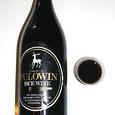
• Most often, Chinese rice wine is used in the marinade. However, it is also not uncommon for brandy, whisky, rum or dry sherry to be used instead. I prefer the conventional rice wine, but whatever is convenient for you will work just fine. Perhaps my only suggestion would be that if using something that has a sharper “edge” to it than rice wine, you may wish to adjust the quantity used accordingly.
And oh, one more point: I made the char siew in the oven. I did not hang the meat up in the customary way as my oven did not allow me to do so; the meat was simply placed on a rack in a roasting pan. And it worked beautifully. It could just as easily be cooked, I’m sure, on the barbecue, if you so desire.
Renee’s Char Siew
Approx. 1 kg of pork
5 tablespoons light soy sauce
3 tablespoons dark soy sauce
5 generous tablespoons maltose
4 tablespoons white sugar
4 tablespoons Chinese rice wine
4 tablespoons Hoisin sauce
3-4 pieces ginger, peeled and smashed
3-4 cloves garlic, whole and smashed
red food color
Glaze (optional):
2 tablespoons maltose, warmed
• Clean the pork and remove the skin.
• In a medium saucepan, combine all the marinade ingredients (light soy sauce through to garlic). Heat the mixture for one minute, to allow the sugar and maltose to dissolve. Let cool.
• Place a few tablespoons of the marinade into a small bowl, and add a small amount of food color. Stir to dissolve completely. Pour the colored marinade back into the main mixture, and mix thoroughly. Check color intensity, and repeat the steps as necessary until the desired intensity of red coloring is achieved.
• Add the pork to the marinade and allow it to macerate in the refrigerator for anywhere between four hours to overnight. Stir occasionally to ensure all sides of the meat are well-covered with marinade. [I only managed to marinate my pork for about 2 hours, and it worked fine.]
• Remove the marinated pork from the fridge about 20-30 minutes before cooking, to allow it to come back to room temperature.
• Preheat the oven to 210C or 410F.
• Line a roasting pan with foil and place a rack in it.
• Place the pork lengthwise on the rack. [I also added about ½ inch of hot water to the bottom of the roasting pan just to help keep the meat moist. This is optional.] Put it in the oven and cook for 10-15 minutes (about 10 minutes for the tenderloin and 15 for the shoulder).
• Baste the meat with the marinade and turn it over. Reduce the heat to 180C or 360F, and cook for another 10-15 minutes.
• Baste the pork again and return to the oven for another 5-10 minutes. Check for doneness. [My tenderloin was done in about 25 minutes or so in total, and the shoulder about 40 minutes or so.]
• This is an optional step: if more of the charred bits, so characteristic of store-bought char siew, are desired, let the cooked pork cool for 2-3 minutes after it comes out of the oven, then brush with the warm maltose. Place the pork under the broiler/grill for 2-4 minutes, turning a few times, until some parts of the pork become slightly charred and crispy.
• Alternately, after the pork comes out of the oven, brush a layer of the marinade (be sure to bring the marinade to a boil and cook it through first though, as it has had raw pork sitting in it) over the meat, and leave to cool and dry for about 10 minutes before slicing the pork. This will give the char siew that final glossy, shiny finish.
I chose the latter option. But, as you can see from the pictures, we didn’t wait until the sauce had been absorbed; the family was impatient to get their hands on the pork. And so it was a little messy slicing into the char siew, with the still wet sauce running into the center of each slice.


Other than that, the char siew looked very good, and tasted just as wonderful, if I may say so myself. And the family unanimously approved of the marinade’s balance of flavor. In fact, I had much difficulty keeping their paws off the freshly barbecued slices of pork; they were gobbling up the char siew faster than I was slicing it, and there was a real danger there wouldn’t be any meat left for the konlo (dry tossed) noodles that I was serving for dinner.
And so, this was our dinner…

An additional note: to make some delicious char siew gravy to pour over rice or the char siew slices themselves, either make another batch of the marinade mixture, minus the food coloring, and cook it down on the stove (remembering to remove the ginger and garlic before serving); or, if no food coloring was used in the original marinade, simply bring the remaining marinade to a boil on medium heat, reduce to a simmer, allow the mixture to reduce slightly, strain and serve.

I’ve just discovered how tasty freshly cooked char siew is; how different it is from store-bought ones. And they freeze well too. You can make a batch, store them in the freezer, and use them to make paus (or baos) and other dim sum items, or use them in fried rice or stir fries… char siew is so wonderfully versatile.
Happy char siew-ing!
Copyright © 2004 Renee Kho. All Rights Reserved.
Please contact me for permission to copy, publish, distribute or display any of the images or text contained in this article.
09:23 PM in Home Cook: Poultry & Meats | Permalink | Comments (25) | TrackBack
Friday, July 16, 2025
Work In Progress
There were several requests for the recipe to the lychee kulfi that I served with my Kerala chicken dinner the other week.
Since it is still very much a “work-in-progress” recipe, and I’m still not completely satisfied with the results, I have decided to post the recipe, as it currently stands, in the comments section of the previous fruit post.
If you do try the recipe, please do come back and let me know how it goes. I would love to find the solution to the still-less-than-ideal texture of the kulfi. Thank you!
And so, it is Friday! After a really tough (my instructor worked me till I felt like a piece of jello!) but fantabulous Pilates Reformer workout this morning, I’m all abuzz with energy and have a silly smile on my face; never mind that I slept only three hours last night. So, here’s wishing everyone an awesome weekend ahead. Eat well, be happy!  And oh, do come back of course on Sunday for my contribution to IMBB.
Happy Friday! 
01:13 PM in Home Cook: Light Touches | Permalink | Comments (5) | TrackBack
Thursday, July 15, 2025
Glutton’s Square

The annual Singapore Food Festival is now on. And this year, it has been extended to one whole month of gastronomic feasting, food fairs, eating tours, themed events, culinary lectures and workshops, cooking lessons and then some. The list of events in this year’s festival is impressively comprehensive, and pretty exciting.
After our dinner at Aiwo the other night, we decided to stop by one of the festival's headlining events – the recreation of the famous Glutton’s Square in the “carpark opposite Cold Storage”.
Now, the name “Glutton’s Square” suggests something grander than what the original food market really was. What it was in actual fact was a make-shift “night market” that existed in the 1960s and 1970s. During the day, the spot was an open-air carpark (or parkade/parking lot to those outside of South East Asia). However, each evening, within a couple of minutes of the carpark’s closing at 5pm, there would be a mad frenzy as eighty itinerant hawkers rushed to set up stalls in the empty compound. In the blink of an eye, the place was completely transformed; hawker stalls were packed almost cheek to jowl, with two tiny carts stationed on each parking space. They jostled for breathing room with the surging crowds that descended on the area. And throughout the night, delicious bowls of wondrous hawker street food were dished out from these small, ramshackle carts. Laborers, courting couples, families, and even the young, chic and beautiful flocked to the carpark for incredibly good food at basement prices. Soon, the place acquired informal monikers like “Glutton’s Square”, “Jaws Centre”, or just plain “Car Park”.
While it may have been a foodie’s paradise, it was a hygiene and environmental nightmare. There were no running water or electricity; leftovers were simply dumped into the public drain system. And so, inevitably, the Government eventually shut the place down, and moved the hawkers into proper hawker centers with the requisite facilities. With that, a legendary Singapore food destination became history. Now, in 2004, it (or at least its memory) has been resurrected and reincarnated – but for one month only.
In the exact same spot, opposite Centrepoint’s Cold Storage, 10 hawkers have been invited to set up shop and to serve up quintessential local food – food that defines the epicurean landscape of Singapore, food that is identified the world over as being “Singaporean”.
Of course, certain things have changed irreversibly. The mobile stalls now come with electricity, proper water supply, grease extractors and waste disposal; they are modern and cost a bomb to rent. Some things though have not really changed, or at least have been created to recapture the spirit and ambience of the old Glutton’s Square, such as the wobbly, rickety tables…

There is also still that same special, indefinable magic of sitting under the stars, feeling the cool night breeze, squeezing with the masses and tucking into plates of delicious hawker food.
The ten stalls provide a wonderful snapshot of Singapore local food. Sure, there are some dishes which many would consider to be quintessential local hawker food that are not represented. However, for a visitor to Singapore, this is a great way to sample a full range of famous hawker food in one place, and to enjoy an incredibly unique atmosphere. For the Singaporeans, especially the younger generation, this is a much longed for opportunity to enjoy the eclectic and electrifying ambience of night food markets which no longer exist and which they have never known. For the older generation, it is a time to relive those memories of shy dates in “the Car Park”.
Of the ten hawkers, there are two that operated in the original market. The rest are well-known in their own right as purveyors of tasty hawker food in Singapore.
Here’s a quick run-down (please excuse the poor shots; my small point-and-shoot doesn’t like being made to work under night conditions, much less with glaring fluorescent lighting thrown in to confuse it even more)…

One cannot talk about Singapore food without mentioning Singapore Hainanese Chicken Rice. A must-try dish for any visitor to Singapore.
This stall is also serving up Teochew Fish Porridge (congee).

Another “must” on Singapore’s hawker food scene: Chai Tow Kueh (Fried Carrot Cake). This is a dish of steamed radish cakes that have been diced and fried with egg and preserved radish. You can have the “black” version fried with dark sweet sauce, or the “white” version that is sautéed with only light soy sauce.

Char Kuay Teow or fried flat rice noodles. This dish plays many a leading role in the food dreams of many overseas Singaporeans; it is probably the one dish that can make any Singaporean outside Singapore long for home.
There is also Fried Hokkien Prawn Noodles – a uniquely Singaporean rendition; very different from the versions found in neighboring countries.

Minced pork noodles, or better known to Singaporeans as Bak Chor Mee (literally, meat vinegar noodles). It is a dish of noodles “dry-tossed” with a vinegary sauce and topped with minced pork and crispy deep fried pork fat. Each hawker will have their own unique version… some are more vinegary than others, some have noodles that are springier than others; and which hawker you rave about really depends on your personal taste preferences.
Crab Beehoon (rice vermicelli). Perhaps the perfect combination of something humble and unassuming (the noodles) with something rather indulgent (the crustacean)?

Fried oyster omelette, or Or Luak to the locals. A yummilicious, though sinfully artery clogging, dish of plump, juicy oysters fried with eggs and a light batter.

It was nigh impossible to snap pictures of the food; there were people everywhere! But notice the stacks and stacks of eggs? That’s how many they go through in one night! And notice the sign on the upper left hand corner? “Die die must try”. This is one of the most succinct colloquial phrases you are going to come across in Singapore when it comes to food. You will hear Singaporeans utter it when they meet something that is close to gastronomic heaven. What does it mean? Well, when translated into more eloquent English, it is simply “too good to miss”. I don’t know about you, but I think “die die must try” has a punchier ring to it, wouldn’t you agree?

Here’s a close-up of the omelette. This was the take-away version (which was very kindly bought for me a few days after our visit). This is one dish that must be eaten freshly dished up and piping hot. It never tastes (or looks) the same once brought home. But you can get a vague idea of how tasty it is, with all the crispy golden brown bits, when it comes straight from the sizzling wok onto your plate. It is greasy, sinful stuff. But good stuff nevertheless.

The hawker food landscape is not complete without Roti Prata (Indian fluffy pan-fried pancakes). And here served up alongside Mutton Soup.

The prata man in action: twirling the pieces of dough non-stop to meet the appetites of the snaking lines of humanity.

Ah! Satay, satay, satay! Skewers of meaty delight.

Here’s more about the food and the famous stall owner. (Click on image to read.)

Nasi Lemak (literally translated as "rich rice") – another firmly entrenched Singapore food love.

Bak Kut Teh (or literally, “pork ribs tea”). Read more here…

And yes, if you have been counting, I missed one of the stalls… the BBQ seafood stall, where you can make your own selection from a range of seafood (like stingray, crayfish and many more), get it all BBQed to your specifications, then served up on banana leaves. One of the best foods to savor while sitting under the stars, in my opinion.

The crowds were amazing. We were glad we had already had our dinner. Lines snaked in front of every stall. At some stalls, it looked as if it would have been at least an hour wait (and most probably a lot more) before you got your food. According to some press reports, the stalls have been serving up to 12,000 people each and every night!
That evening, looking at what everyone was eating, the or luak (oyster omelette) looked especially tempting (and which I subsequently got to taste a few days later). The roti prata looked very nice too. The char kuay teow seemed to be of the rather “wet” variety – not the type I like. The satay looked very good though.
Sure, the prices are perhaps slightly higher than normal, but I think the atmosphere more than makes up for it. It is nice to just visit and enjoy the food under the stars instead of in the regular hawker centers. I’m thinking that it is the perfect spot for my usual 3am supper! Yes, this place operates nightly from 6pm to 6am. So, for all the night owls, I think this is a prayer answered!
There are many other interesting food events going on throughout the month. They range from high-brow events where dinner costs thousands of dollars, to simple, free events that allow the family to enjoy a great outing together. “Supper Madness @ Chinatown” sounds interesting; as does “Katong – The Spice of Life”. There are also many, many different food bazaars going on in various shopping malls. Lots of makan-ing (eating) to do this month!
Happy festival feasting!
Copyright © 2004 Renee Kho. All Rights Reserved.
Please contact me for permission to copy, publish, distribute or display any of the images or text contained in this article.
05:36 PM in Lion City Shiok-Eats: Hawkers | Permalink | Comments (7) | TrackBack
Wednesday, July 14, 2025
Aiwo – Love Me
It was only a matter of time. Only a matter of time before someone came up with a new conveyor belt restaurant concept. Five or six years ago, at the height of the conveyor belt sushi craze in Singapore, I kept mentioning to friends, or anyone who would listen to me, that doing a dim sum conveyor belt restaurant would be an interesting business proposition. My idea was shot down as unworkable. Well, a couple of years back, the first dim sum conveyor belt restaurant rolled onto the Singapore eating scene. And now, in 2004, “health food” is being wheeled out on a conveyor belt.
Aiwo – the anglicized spelling of the Mandarin phrase “love me” or “love oneself” – is the 2½ months old new kid on the block offering this novel food concept. In place of sushi or dim sum, it is little morsels of healthy food that go round and round on the conveyor belt. Apparently, each serving of food promises to have no more than 50 calories. The dishes are also supposed to be low fat, free of cholesterol, and as the restaurant puts it on their promotional flyer, have “only low and medium density carbohydrates”. So, clearly, for anyone who is on a carb-restricted diet or just want to watch their waistline this would seem the perfect place to dine. Even if one eats 10 of the dishes, it will only come to a mere 500 calories. It is an interesting marketing strategy.
Now, I’m always curious about new concepts and ideas, so we just had to go check this place out…
The décor is simple – another version of the ever-popular sparse, clean, pared-down modern look. Lots of exposed concrete, wooden flooring, metal/steel furniture; and the must-have glass show-case kitchen from where the chefs dish out the small plates of food. Several large plasma screens, flashing information about the menu items, complete the modern appeal. However, for a touch of the natural and in keeping with the “health” theme, a water wall runs down the right side of the restaurant.
The owners have quite obviously taken pains to improve and innovate on existing conveyor belt restaurant concepts, practices, technology and design. I particularly like their glass-topped, steel tables. Each one has two small drawers (one on either side), in which the forks, knives, spoons, chopsticks, napkins and the a la carte menu are kept. Not only is it a very nice practical (and clever) touch, it also looks really good. Another thing I really like is the attention to detail in choosing the cutlery and glasses. These are classy, good quality cutlery and elegant water glasses; probably even better than some of the high-brow establishments! And none of those small plastic plates, thank you very much. Here, white china plates are used to dish up the food. In a business where first impressions do count; this is a big brownie point.
The heated conveyor belt is of improved technology. Unlike the dim sum version, this one is fully heated, rather than just having “hot spots” at regular intervals along the length of the belt. And yet it is cool to the touch, quiet and smooth moving. Nice.
It is interesting that the restaurant has decided to do away with the standard counter seating that is common to all conveyor belt restaurants. Instead, only table seating is provided. The curious thing is that it appears only groups of four and below are catered for. One wonders what happens if you have a fifth friend who wants to come along. Nevertheless, I really like the leather-looking chairs – very plush and highly comfortable.
The food concept is simple. The meals are apparently all based on the Zone diet (a popular American diet plan) that espouses a daily intake of 40% low-density carbohydrates, 30% low-fat proteins and 30% mono-saturated fats. According to the restaurant, they hired a team of food technologists and nutritionists who spent five years studying and researching the diet and the menu.
Each day, there are 14 items on the belt, of which 10 are vegetarian options. The menu changes daily, and the chefs are said to have a repertoire of 400 Chinese, Indian and Mediterranean dishes. So, theoretically, you can eat at the restaurant everyday for nearly a month before the dishes are repeated.
The restaurant charges a fixed price for the meal – S$12.60+++ (US$7.40) for lunch and S$14.60+++ for dinner. For this amount you may eat as much as you want from the conveyor belt. The price also includes a starter of soup and a side of soya unleavened bread. There are four further options on the a la carte menu that can be ordered separately and range in price from about S$6 to S$11 per serving. Desserts are also extras.
We visited the restaurant on a Sunday evening. It was quiet – largely due to its location in the financial district which is always deserted during the weekends. There were only 3 other couples dining there throughout the time we were there; the staff far outnumbered the patrons.
Usually when I dine at a restaurant or any eating outlet for that matter, I try to see the positive elements of the food, service and ambience (and almost always there will be some). But where necessary to also offer some constructive feedback on areas where I feel (in my own personal opinion) perhaps more improvements can be made. I do not doubt for one second that the restaurant business is a very difficult one. It is a people business. It is dependent on people for revenue, and dependent on people to provide the food and services. And human beings are imperfect – innately so. Therefore, it is not for us as imperfect customers to demand absolute inviolable perfection from fellow humans who serve us or cook for us as part of their jobs.
However, there are times when, try as I might, I am totally hard pressed to be positive, much less get excited about the food and service of a particular restaurant. And sad to say, Aiwo falls into this category.
We all know that when we choose to dine at a conveyor belt restaurant, we cannot expect food quality beyond a certain level, regardless whether it is sushi, dim sum or any other type of food that is being served. By its very nature, the conveyor belt concept does not allow for a level of quality that normal restaurant operations can provide when it comes to freshly cooked, immediately served dishes. The conveyor belt restaurant is also a niche business idea based on economy, value and speed. Thus, its food cannot fairly be compared with a full-fledged restaurant. Nevertheless, one still expects the food to be reasonably tasty and appetizing.
These were the dishes on the menu the evening we were there.
The food tasted healthy – very healthy in fact. So much so it was all rather one dimensional.
I remember reading in one of the newspaper reviews of the restaurant, the reviewer complained that salt had been completely left out, and the dishes were bland. The management had obviously read the review. They now salted everything; and in many of the dishes, they oversalted, such as the soup and several of the other items. In fact, saltiness was the one overriding taste note that was apparent in almost all the dishes (although some of the items remained fairly bland – thankfully so, for the sake of our taste-buds and kidneys).
On the “advice” of another newspaper review, they seemed to have toned down the spices, and made everything “middle of the road”. In my personal opinion, food, or at least good food, cannot be “middle of the road” – that is but a recipe for mediocrity. Sure, you can have delicately flavored dishes and you can have food that is boldly put together taste-wise. But you just can’t have “neither here nor there” food. And so, the dishes did not really taste very much different one from the other. It probably wouldn’t have mattered whether you had the broccoli or the vegetable stew… they all looked and tasted pretty much the same. There was a woeful lack of interesting flavors or complex aromas and textures to tempt and tantalize the taste-buds. There just wasn’t anything to get excited about at all, I’m sad to say.
It also didn’t help that all the dishes were either cold or barely lukewarm. They had all been evidently cooked way ahead of time, most probably at lunchtime. Some of the dishes had also quite obviously been reheated to death.
This was the complimentary side serving of soya-based unleaven bread. What can I say? It was dry, tough, chewy, almost stale tasting. Almost inedible. We left it untouched.
Item 1 – Steamed Fish with Szechuan Vegetables. I don’t know about you, but this did not look steamed to me. The fish had a layer of batter, and was thus most likely deep fried (which couldn’t be classified as a healthy cooking method by any standard) before perhaps being braised. The batter was soggy, the fish cold. The Szechuan-style sauce did not have any noticeable notes of tangy sweetness or indeed any “spiciness”. Yet, this was one of the better dishes of the evening that I felt I could almost “enjoy”. At least the fish was not overcooked but was tender and moist.
Item 2 – Chicken Supremes Cooked in Chettinad Spices. Dry, reheated chicken. No evident spice notes. ‘Nuff said.
Item 3 – Grilled Salmon Marinated with Herbs & Mustard. You know, I’ve always felt it was difficult to find truly dry, coarse as tree bark, cooked-to-death fish in Singapore. Most restaurants did either a competent enough job or an outstanding job. Rarely was it dismal. Here it was. That piece of salmon was the hardest, driest piece of salmon I had ever eaten in my life! And I have eaten a lot of salmon, one of my favorite fish!
Item 4 – Kung Pao Chicken. This is a well-known trade-mark Sichuan dish that is (or should be) spicy and intensely flavored. This version was bland, bland, bland. The meat was dry, dry, dry. It tasted more like dark soy sauce chicken than it did kung pao chicken. For a restaurant that was operating in a pre-dominantly Chinese society where people knew their kung pao chickens, this was folly.
Item 5 – Braised Tau Kwa Simmered in Mild Indian Spices. Mild was the key word. This dish was better than some of the others, but hardly close to being exciting.
Item 6 – Mixed Bean & Lentil Casserole. Undercooked, hard beans. “Middle of the road” (read bland) flavor composition.
Item 7 – Stir Fried Celery with Lotus Stem. This was passable. The dish was cold, but at least these veggies were of the type that could be comfortably eaten cold. Apart from a few pieces of celery that had not had their fibrous outer layer removed cleanly, the veggies were nicely crunchy and with clean, sweet flavors.
Item 8 – Chic Peas Cooked in Spinach Gravy. These chickpeas were hardly chic (hey, don’t look at me. I’m just quoting the menu), but there were one of the better dishes that night. So no complaints from me.
[Sorry, no picture of Item 9. I was otherwise engaged in “protecting” my plate. More on this later.]
Item 10 – Braised Three Mushrooms with Mini Kai Lan. This we actually quite liked. Flavors were full-bodied enough, and the vegetables were tender with enough crispy crunchiness. They were definitely not freshly stir-fried, but more akin to the standard buffet variety where the kai lan had been left sitting on the warmer for a long time. Still, it was one of the tastiest dishes of the evening. And probably helped in no small part by the fuller (read oilier) mouth-feel of the vegetables.
[Sorry, again no picture of Item 11. We were busy “defending” our plates.]
Item 12 – Steamed Eggplants with Chilli Soya Sauce. The eggplant, even though it looked succulent and whole on the plate, was mushy to the point of being baby food. It could not be picked up with a pair of chopsticks; it simply disintegrated into mush. The chilli part of the sauce was absent. Other than that, flavors were okay; we just weren’t thrilled with the texture at all.
Item 13 – Pan Roasted Broccoli Coated with Red Spices. The broccoli looked and tasted as if it had been re-heated quite a few times. Thankfully I’m the sort of person who quite like my broccoli tender. I don’t know… I never realized that tomatoes could be classified as “red spices”. Still, overall, I found this dish to be more palatable relative to some of the others.
Item 14 – Stir Fried Tofu with Soya Mince. I don’t actually remember much of this dish. I only remember being momentarily confused between this dish and the bean and lentil casserole. This one looked almost like the latter, only with a piece of (deep fried!) tofu and some gravy ladled over it.
None of the dishes stood out. None was exciting or scintillating. After a few dishes, my palate was crying out for textures, flavors and aromas. How about something crunchy (nuts perhaps?), something tangy, something slightly on the sweeter side, something spicy, something savory… anything… to wake up my taste-buds.
You may be thinking: but it’s health food; how can that taste good? But it can. I know it can. I cook healthy all the time at home. And I don’t think my dishes are lacking in textures or flavors.
The service staff was a young, friendly, polite, professional and highly motivated bunch, which was always nice and much appreciated. They were also quite obviously very well-trained by the management – too well-trained even. We could only deduce that they had been instructed to keep an eye on the customers and to clear the emptied plates quickly to prevent them from cluttering the tables. That is a good and basic service guideline. And I agree that it should be in any restaurant service training manual. However, there is also a need to allow (or encourage) flexibility and creativity in the staff. Train them for this if need be. Service is a fluid thing. Each customer is different, each situation is different.
We ended up with a situation where plates were whisked from under our noses the moment we had popped the last morsel of food into our mouths. The staff hovered near the table, watching, waiting for us to take the food off the plates, then *swoop*… in they came, and removed the plates. One young lady was in such a hurry to reach our table upon seeing an empty plate that she nearly tripped on the steps!
Now, my friend and I, we decided to share the food, even though all the dishes already came served up in small individual portions; we wanted to taste the food before deciding if we wanted to get another plate of the same. We also preferred to each keep one of the emptied plates in front of us to use as a “catch-all” for falling crumbs, and to rest our cutlery on in-between bites. Nothing wrong with that, surely. But there was one young male waiter who simply could not bear the sight of those two empty plates sitting in front of us. Each time, as soon as we had finished a plate of food and had barely put down our cutlery onto the plate, he came, moved our cutlery, placed them onto a napkin on the table, and cleared the empty plates. He was more concerned with making sure there were absolutely no empty plates on our table than with whether or not his arm was literally brushing our faces in his haste to reach across us to move our cutlery and clear the plates after each course. And given that this was a conveyor belt restaurant where we were constantly picking dishes off the belt, we were thus interrupted almost every 5 minutes!
It reached the point where my friend, trying his very hardest to still sound civil and polite, but with frustration bubbling dangerously close to the surface, finally said to the young waiter:
We would each like to keep one empty plate in front of us to rest our cutlery on, please.
I have given you napkins to put the cutlery on, so I can clear the empty plates.
But we prefer to put our cutlery on the plates.
I gave you napkins, sir.
Is there a rule against having empty plates on the table?
No. I need to clear the empty plates.
Why?
The plates are empty so we clear them.
But we wish to continue using two of the emptied plates. There seems to be a problem with that?
The young chap was very flustered by now. He had obviously not been trained to deal with “disobedient” customers who would not rest their cutlery on the paper napkins that had been provided, and who refused to surrender emptied plates. He stared woefully and longingly at the two plates, then simply turned heel and walked away. He never came near our table again for the rest of the time we were there. At this point, if I too had not been feeling so frustrated and irritated at having our conversation constantly interrupted by the plate clearing, I would have burst into giggles.
The restaurant management must be a very meticulous team; one that is very big on structure, order and details. In most conveyor belt restaurants, be they sushi or dim sum outlets, a whole variety of dishes are put onto the conveyor belt, and the customers are free to pick and choose whatever strikes their fancy. At Aiwo, the conveyor belt is segregated into 14 equal sections, with each section clearly marked out by a number plate (see 2nd picture of the interior of the outlet). Within each section is placed the dish that corresponds to that particular number on the menu. We presume this is to allow the customers to know what they are eating. So, if you pick a dish from the section numbered 11, you know that is the Duo of Gourd, which is listed as no. 11 on the menu, and if you take something from section 9, you know it is the vegetable stew, and so on.
Unfortunately, what this also means is that if you pick up a plate from section 10 for example, and discover you like it and want another one, you have to wait for the slow-moving conveyor belt to go round the other 13 dishes before you can take another plate of no. 10. And woe be you if you happen to be in deep conversation when no. 10 rolls around again, and you miss it. You then just have to sit patiently for many minutes more for the other 13 dishes to go by again before getting your next chance at no. 10.
This system truly boggles the mind. Surely, this restaurant, situated as it is in the heart of the financial district of Singapore, from where billions of dollars are handled and complex international deals are negotiated each and every day, can trust its targeted clientele of successful professionals to be intelligent enough to be able to tell chicken from fish, chickpeas from lentils, and broccoli from bitter gourd without having a number to tell them what they are eating!
We tasted just about every item on the conveyor belt menu – or at least I think we tasted just about every dish available. Between dealing with all the plate clearing interruptions, and the watching out for the revolving numbers, who knew what we managed to taste and not taste. As soon as we had finished eating, we were out of there. And you’ll have to pay me to go eat there again the next time. Meanwhile, for healthy and tasty food, there is always my own kitchen.
Aiwo: Food For Life
79 Robinson Road
#01-05 CPF Building
Tel: 6226 2232
Open Daily; 11am – 2.30pm; 5 – 9pm
Copyright © 2004 Renee Kho. All Rights Reserved.
Please contact me for permission to copy, publish, distribute or display any of the images or text contained in this article.
04:19 PM in Lion City Shiok-Eats: Buffets | Permalink | Comments (11) | TrackBack
Tuesday, July 13, 2025
Technology Woes
Just a quick note to say that I am currently experiencing problems with my shiokadelicious email address.
If you have sent me an email over the last 24 hours or so, I would not have received it. My entire email account seems to have completely disappeared from my domain provider’s records! *poof* Vanished into thin air... just like that. So, while I try to sort this thing out with my service provider, please re-send your emails to my personal email address, which can be accessed by clicking on the email button on the navigational menu bar on the right.
My apologies for the inconvenience. What can I say? Technology!
09:05 PM in Crumbs & Tidbits | Permalink | Comments (1) | TrackBack
Monday, July 12, 2025
What About You?
Over the weekend, a bunch of us were sitting around after dinner yakking away about everything, anything and nothing in particular. As usual, food was a topic that we kept coming back to. At one point, the conversation veered onto a rather inane, yet highly entertaining, funny, insightful and interesting path; certainly, it evoked quite a few chuckles and some ribbin’ of each other.
Someone had started us on the topic of odd or unique eating habits. And I’m not talking about such things as eating ice cream with ketchup or anything downright weird like that. But everyday, normal things… like eating toast or using cutlery. It’s fascinating how each person has very individual and unique ways of going about the daily business of eating food. Little quirks that we do not give a second thought to, maybe are not even really aware that we do them, and yet they can potentially be very revealing.
There was much humor as everyone’s “deep dark eating secrets” were exposed. And so I’m thinking it would be quite a fun way to start the week with a small online version… just to get to know you a little better, and for you to know me a little better.
Here’s a pick of 20 of the “questions” that came up during that evening’s conversation; please join in, have a little fun and post your answers in the comment box below…
1) How do you like your toast: light, medium, dark or charred  ? Or… toast?!? But that’s a carb!
2) When applying spreads to your toast, must they cover every square millimeter and extend right up to the edges of the toast? Or do you always leave a little margin all the way around? After all, there is more than enough real estate on a piece of toast.
3) Do you automatically fold the toast in half before munching down, or do you keep the toast flat and have the spreads exposed in their full luscious glory?
4) When it comes to drinking tea or coffee, which goes in first? Milk? Sugar? Or who cares anyway?
5) Before you chow down on an apple or pear, do you automatically try to break the stem off, or just let it stay where it is and simply ignore it?
6) Peeling bananas: do you keep the peel attached to the tip of the fruit to keep your fingertips clean? Or… urgh! Have banana peel flopping over your hand? No way! The skin comes off – totally!
7) What’s your papaya strategy? Which part do you eat first: the head section (the part where the fruit was attached to the branch), the tail section or the middle? Or… huh?? What papaya strategy? It’s only a papaya!
8) Are you a “swopper” or a “stayer”? When it comes to using the fork and knife that is. Do you do the American thing, and switch the fork from hand to hand? Or are you definitely European in this sense? None of all that to-ing and fro-ing for you, thank you very much!
9) Staying with cutlery… do you hold your fork and spoon horizontally with the four fingers wrapped securely around the handles? Or, do you let the handle rest in the valley between your thumb and index finger, like you would a pen?
10) It’s burger and fries time! Do you always eat the fries first? Or the burger first?
11) Pass the ketchup please. Or… heaven forbid! What scandal! Ketchup on burgers?!
12) Devouring an ice cream cone… do you lick, suck or bite into the ice cream? Umm… remember, we are talking about eating an ice cream cone here…
13) More sexy food… do you always chew on chocolate, or let it melt slowly and sensuously in your mouth? Or… chocolate? You feel a headache coming…
14) Aahhh… the cheery beauty of a sunny-side up or over-easy fried egg… You eat around the soft yolk, carefully preserving it, and keeping it for last. Or, you tear into it, spilling its golden treasure and mixing it all up?
15) Are you a horizontal or vertical person when it comes to bread rolls? Do you break a bread roll in half down the vertical or along the horizontal?
16) You’re all for excess: your cereal must come swimming in milk. Or, maybe you like the cereal just barely covered?
17) What does it for you? Tea in a cup or mug? Juice in a glass or a mug? Or anything as long as it doesn’t leak?
18) Are you a food purist or a “hippie”? You taste one flavor at a time, you never mix the foods on your plate? Or, the more the merrier?
19) Oops… I can’t count! You’re done! And that was only 18 questions… and you thought it would take a long time, huh?
So, to start the ball rolling… this is me…
1) Medium brown for me please! But I’m okay with dark if I’m half-asleep and forget to turn the knob.
2) Oh, always! Right up to the edges! The thicker the spread the better. I like the spreads almost spilling onto my fingertips. Plus, I always “clean” the knife on the edges of the bread… I get a “clean” knife, and a well-filled piece of toast all at the same time! Woo-hoo…
3) Nope, the toast stays flat. I love the look of my luscious spreads.
4) Uhh… not a coffee or tea drinker, I’m afraid. But on the rare occasions I do drink tea that is not green tea or chamomile, it’s milk only for me please.
5) I’m compulsive… I must try to twist the apple stem off… and I even still do the childhood game of saying the alphabet as I make each twist!  What can I say? It’s an ingrained habit. And yep, I also try my darnest to snap off the stem of a pear too. If it doesn’t yield, a knife always does a clean job.
6) Either way works for me. I’m strangely not fussy about this.
7) No conscious strategy… but I always end up digging into the middle first, then the head (which is less sweet) and finally the tail (the sweetest part)… I like ending on a sweet note.
8) I’m a “stayer” alright… although I do, on the rare occasion, get afflicted by a bout of Americanism.
9) Definitely… the fork and spoon rests near-vertically between the thumb and index finger.
10) Ummm… it’s usually a few fries first… okay… a couple of dozen fries first (who can resist piping hot fries?)… then the burger… then the fries again.
11) You got to be kidding! Ketchup??!! *scrunches nose in horror*
12) Lick or suck… depending on mood.
13) Bring on the chocolate, I say. And it’s never ever chewed… okay, maybe with one exception… if the chocolate comes filled with biscuits or wafers.
14) I save the best for last… the whites are carefully eaten first… and then the yolk is popped into the mouth whole… yum!
15) Usually, I break the roll horizontally, around the “equator” of the roll… then, I eat the bottom half first, because it’s not as nice (in my opinion) as the top crusty half.
16) Just a light coating, please. I want cereal with milk, not milk with cereal.
17) I realize I hardly think of using anything but a mug when making a drink for myself. It’s a mug all the way… for hot drinks, for water and even juices… A glass just isn’t in my regular food consciousness… 
18) Somewhere in between? It’s usually just one or two flavors/types of food in each mouthful for me… maximum three. Otherwise it’s just taste chaos in the mouth, and my taste-buds go on strike!
Okay, now your turn…
Copyright © 2004 Renee Kho. All Rights Reserved.
Please contact me for permission to copy, publish, distribute or display any of the images or text contained in this article.
12:38 PM in Food and Drink | Permalink | Comments (21) | TrackBack
Friday, July 09, 2025
Doing It My Way

I can probably be considered a borderline “compulsive clipper”; I am constantly clipping food articles and recipes from newspapers and magazines. These get filed away in folders, and almost never see the light of day again. Rarely do I go back and read them a second time, and rarer still do I cook any of the recipes. Over the years, this haphazard collection of pieces of paper has grown into an unwieldy and rather messy pile of folders covered with dust. So, recently, whenever I have a spare moment or two, I take on the arduous task of going through some of these files, and weeding out the “obsolete” recipes.
I can’t help but notice how far my baking and cooking skills have evolved over the years; how much my gastronomic tastes and interests have changed; and how different my current perceptions and concepts of good food are from way back when. There are so many recipes which, when I first snipped them from the newspaper or magazine, I must have found especially compelling, and yet when I look at them now, I go: “huh? Why did I cut this recipe?” Or even, as I read through some of the recipes, I can now instinctively tell: “nah, this won’t taste very good”, or, “this won’t work too well”.
One of the local food columns I have a fair collection of clippings of is “Mad About Food” by Sylvia Tan, a well-known Singaporean food writer. She seems to live a charmed life; married to a suave actor, she appears to be constantly holidaying at all sorts of exotic locales around the world. She would then come home and write about her food experiences in these wonderful places and give recipes of her attempts to re-create some of her best-loved flavors from these trips.
I like her casual writing style, and she has some interesting ideas, about food, cooking and the creation of the various dishes, which I quite enjoy. All her recipes sound tasty and wonderfully straightforward – at least on paper. Until the last couple of months, I had never made any of her recipes. The very first time I tried one of them, and followed her instructions to the tee, it was an unmitigated disaster. Eighty percent of the dish was left uneaten; the family politely tried to eat at least 20% of the dish to make me feel better. When I decided to try a second recipe of hers, I wised up a little, and made some adjustments along the way, and yet the end result still could not be described as being tasty. Refusing to admit defeat yet, I took out a third recipe for a gorgeous looking Kerala Chicken Roast and decided to give that a go.
I love cashew nuts, and this recipe uses lots of them. And I have a soft spot for dishes that are full of various spices, and yet are mild in terms of chilli heat. I tend to find such creations more intriguing and tantalizing than straightforward “hot” curries; I find their flavors to be more complex and full-bodied.
Going on past experience, I knew some tweaking would be necessary; I just didn’t realize how much. In the end, the dish I created was almost nothing like the recipe she wrote about. It was almost like I had created a brand new dish based on her writings.
As with the previous two recipes, the ingredient quantities were very inaccurate and inadequate. Her recipe was for 1.5 kg of chicken; I used only 1 kg of chicken but I ended up using, for example, 5 medium tomatoes to her 2, and I still felt there were not enough tomatoes in the final dish; I ended up using 2 cups of cashew nuts to her 1 cup. I also increased, across the board, the amount of spices called for.
Another realization was that her instructions were frustratingly vague; for the most part, I had to use my own past experiences of cooking Indian curries to see me through. Even basic descriptions, such as how much ginger to use, how the ingredients should be prepped (chopped or finely minced? sliced or diced?), or how much cooking time would be required, were sketchy at best or simply left out altogether. The dish took a lot longer to cook than she had indicated; I ended up with a table of very hungry people waiting impatiently to be fed. The article also expounded at some length about not adding any water to the pot; the gravy should come entirely from the onions being cooked down. And yet, as those who often cook Indian curries will tell you, most of the gravy usually comes from tomatoes being cooked down, with only supplementary moistness coming from the onions. Even with my much increased amount of tomatoes, there just wasn’t enough moisture in the pot. It got to the point where the food was starting to stick to the bottom of the pot before the chicken was cooked. The article intoned that I should be patient; but if I had waited any longer, dinner would have been burnt. So, yes, I added a little bit of water (about ¼ cup or so), and the ingredients immediately slurped up every drop thirstily. It still produced the “dry” sauce/gravy it was supposed to produce, and it also prevented the dish from burning. The next time round, I would up the amount of tomatoes even more – to maybe 8 or even 10 tomatoes; then there would be no need to add any water. It would also give the dish a more pronounced tangy feel, which would be nice.
After a long road of much adjusting and last minute improvisations, I was so glad the final result was a stunning success. Everyone loved it! The flavors were well-balanced, with just the right touch of soft chilli heat. It was spicy, sweet, savory and a touch tangy. Very nice indeed. And yes, I would most definitely make this dish again – but only if I do it my way.
Kerala Chicken – My Way
1 kg chicken parts *
3½ generously heaped teaspoons chilli paste **
1½ generously heaped teaspoons turmeric powder
4 tablespoons light soy sauce ***

6 to 8 big purple onions
8 to 10 medium ripe tomatoes
7 cloves garlic
2” to 2½” knob fresh ginger
1½ to 2 cups raw cashews ****
1 cup raisins
1 to 2½ tablespoons light soy sauce (optional; to taste)
1½ heaping tablespoons coriander powder
1½ rounded teaspoons garam masala
* I used just the whole legs and wings of three “kampong chicken” (local free-range chicken). [The breasts and backs were saved for cooking soup with.] Keep in mind that if you are using non-kampong chicken, it will cook slightly quicker.
** I used our own home-made chilli paste; you may use instead about 4 to 5 generously heaped teaspoons of regular chilli powder.
*** I know soy sauce is not very Indian, but I tend to prefer using this to salt, as I find it gives a more complex and rounded saltiness than just salt alone. However, feel free to use salt – about 1 tablespoon worth, and adjust further to suit personal preferences.
**** I really like cashew nuts, and bunged in 2 cups of the stuff, which was just nice for me. However, a couple of my guests preferred it to be less nutty. So I’m thinking perhaps 1½ cups (or even 1 cup if you really don’t want too many nuts in the dish) would be a nice balance.
• Remove the skin and excess fat from the chicken. [I have found that this usually helps the meat absorb the seasonings; and I was gratified that the Keralan chef from whom Sylvia learnt this dish was quoted as saying the same thing; he always stripped the chicken of all skin and fat before cooking.] Rub the chilli paste (or powder), turmeric powder and soy sauce into the chicken. [Important note: if using salt, do not add to the marinade. Macerating the chicken in salt for longer than 20 minutes will result in very tough meat fibers! Add the salt just before cooking the chicken. The same concern does not apply however if using soy sauce.] Leave the chicken to marinate in the fridge for about an hour or so.

• Meanwhile, cut the onions into thin half-rounds; blanch, peel, seed and dice the tomatoes; finely chop the garlic; and peel, thinly slice then pound (using a mortar and pestle) into a paste the ginger.

• In a wok or large pan, heat about 3-4 tablespoons of oil. Sauté the garlic and ginger briefly, until fragrant.

• Add the onions and sauté until lightly softened. [It will look like there is an excessive amount of onions; but it all cooks down in the end.]

• Once the onions are slightly soft, add the tomatoes, and stir to combine. If more chilli heat is desired, 2 to 4 chopped green chillies can also be added at this point.

• Next, pop the chicken into the wok and brown.

• After the chicken has changed color, throw in the cashews; stir to combine.
• Cover the wok, turn down the heat, and cook until the chicken is tender and the onion mixture is cooked down and thickened. [My chicken took about 45-50 minutes to cook.] Stir occasionally to prevent sticking.
• Halfway through the cooking time, add the coriander powder and the raisins. If necessary, also adjust the seasonings to taste; add more salt/soy sauce or chilli paste/powder as required.
• Just before removing the chicken from the heat, stir through the garam masala.

And there you have it – Kerala-style chicken with cashew nuts. This is a very mild, dry “curry”. The “sauce” is less of a gravy and more of a thick relish of cashews, onions and raisins. The flavors are simply quite gorgeous; rich, intense and complex. The cashews are beautifully tender with a delicate bite and crunch; their richly nutty aromas and creamy texture add wonderful complexity to the dish. The raisins are soft, plump and soaked through with the flavors of the chicken and gravy, and in themselves lend a beautiful finishing note of sweetness to the sauce. The onions, all soft, caramelized, sweet and infused with the spices, are out of this world. And the combination of the tender chicken with this thick, intensely flavorful “relish” is simply finger-lickin’ good!
I served the chicken with a stir-fried spicy veggie, a sweet, sour and spicy cucumber relish/salad and a hastily improvised coriander-raisin basmati rice.
Coriander-Raisin Basmati Rice – My Way

Freshly cooked, warm basmati rice
Big bunch of coriander (cilantro or Chinese parsley)
¾ cup dark raisins
½ to 1 carrot, finely diced
• Cook basmati rice as per normal, remembering to add a pinch of salt to the cooking water. [It is also important to soak the rice for about ½ hour before cooking, and then cook it in the soaking water. This does produce incredibly soft and fluffy rice.]
• Prepare the coriander chiffonade and set aside.
• Finely dice the carrots and very quickly sauté in a little hot oil until nicely tender. Drain well, and set aside.
• Just before the rice is assembled, quickly rinse the raisins in hot water, just to plump them up and warm them a little.
• Fluff up the rice with a fork; add the other ingredients and toss to mix.

Now, you will notice that the final rice looked rather haphazard. I had given instructions to my househelp to put together the dish while I busied myself with finalizing all the other details of the dinner party before the guests arrived. I figured it was a pretty straightforward assembly. Unfortunately, as you can see, the carrots were diced way too fine; they almost disappeared completely into the rice. I had wanted to use them to give a bright dash of color to the dish. The coriander, on the other hand, was so coarsely chopped that it was a rather dominating sight. Plus, I had intended to include some diced cucumbers in the rice too (as can be seen from the picture of the ingredients), just to give a nice refreshing crunch. However, A. totally forgot about the cucumber and it was left out. Oh well. These things happen, and they are not the end of the world. While the rice was not a very elegant sight by any means, it still tasted wonderful. The coriander gave a wonderful herby overtone to the naturally aromatic rice, while the raisins provided subtle sweetness and tied the rice and chicken together rather nicely.
I really like the idea of serving basmati rice tossed with different ingredients. The possibilities are near-endless. Perhaps kernels of fresh corn for a colorful and crunchy addition… dried apricots… finely diced black olives… lightly sautéed zucchinis… and nuts! Nuts would be absolutely wonderful. If I had not been serving the rice with a dish that already had cashews in them, I would most definitely have thrown in some toasted almond slices or slivers. What a gorgeously fragrant rice that would have made!

It wasn’t a particularly elegant or refined looking meal, but taste-wise it was a hit! I really liked both the chicken and the rice. Both are definite keepers.

And to round off the highly satisfying meal, I served up home-made soy milk-based lychee kulfi…

These tasted very good; but everyone agreed the texture still needed some fine-tuning. Still, being the highly supportive friends that they were, everyone slurped up the kulfi quite happily!
Another evening of good food in the wonderfully enjoyable company of friends!
Copyright © 2004 Renee Kho. All Rights Reserved.
Please contact me for permission to copy, publish, distribute or display any of the images or text contained in this article.
05:00 PM in Home Cook: Poultry & Meats | Permalink | Comments (18) | TrackBack
Thursday, July 08, 2025
‘Tis the Season for Juicy Sweeties
I love fruits. Any kind of fruit – or just about. And I really like this time of the year when it comes to fruits… it’s a bonanza of tastes, flavors, aromas and textures. There is of course the much anticipated and eagerly welcomed mid-year durian season; there are the wondrous summer fruits from the US and Europe: Bing and Rainier cherries, blueberries, strawberries, white nectarines, white peaches… (Speaking of which, have you tried the ones from Israel which recently arrived at Cold Storage? Quite lovely.)
This year, we also seem to have a sudden influx of a lot of fruits from South Africa. Maybe they are not new; perhaps I just never really paid attention in the past… but suddenly I’m noticing that the supermarkets are filled with trays of South African persimmons (or Sharon fruit) and Forelle pears…

These are a new discovery for me. I quite like these pretty red-flushed pears. To me, they seem to taste somewhat similar to the sugar pear – which I adore and whose season is so fleetingly short; although the Forelle’s fragrance and sweetness seem even more delicate and subtle. Their flesh is also crunchier and firmer than the sugar pear’s. I like them well ripened; when they lose their little touch of sappiness. I’m also thinking that, maybe, they may work better as cooking/baking pears rather than eaten fresh. While they may not be quite up there with the sugar pear on my “adore” list, they are certainly a sweet new addition.
But what I’m really excited about at this time of the year are these…

Yes! It’s lychee (or “li chi” in Mandarin) season! It’s a happy sight when the first baskets of Thai lychees start appearing. But I normally wait; I take that as a sign of sweet things to come. For usually, a couple of weeks after the Thai arrivals, we get these – Lo Mai Chi from China. And these lychees are the ones I really like.
They tend to be slightly smaller, but oh, they are sweet, sweet, sweet! And very, very juicy. Bite into one, and immediately you have sweet nectar running down your chin and your fingers. Glorious!

Lo Mai Chis are known for their thick, fleshy pulp and tiny seed. And you know what I really like about them? Their “inner” flesh (the part that touches the seed) does not usually have that layer of thick, sourish husk attached to it. Most importantly, the Lo Mai Chi does not leave that awful sappy, gummy after-taste and feeling in your mouth after you have eaten it. The sweetness, flavors and fragrances are just so pure…
The other day, I came home with a few baskets (okay, maybe too many baskets) of these Lo Mai Chis, and so ended up using some of them to make…

… lychee “kulfi”. Soy milk-based lychee “kulfi”. The flavors worked very well… light, refreshing and summery. And they worked even better when paired with chopped toasted almonds.

It also allowed me to finally inaugurate the flower-shaped silicone moulds that I bought back in April. Quite pretty, no? And the moulds were great for frozen desserts… the kulfis popped right out with little effort, and each were beautifully shaped.
As we hit the peak of lychee season, my thoughts start turning to another sweet, juicy favorite – longans! Their season is always not far behind. Already, just the other day, I spotted some Thai longans in the supermarket. And that can only mean that the Chinese and Taiwanese varietals (which I prefer) will be appearing soon. Yay!

Meanwhile, another Chinese sweetie that I am currently savoring with delight is the Hami Melon.

In appearance, the flesh of this famous Chinese melon has a slight resemblance to the cantaloupe; its taste and texture are however are quite different.

Unlike the soft, yielding flesh of the cantaloupe, the Hami Melon has a slightly crispy texture – a little reminiscent of Asian pears like the Nashi or the Fragrant Pear. Its bouquet is also more delicate than the pronounced sweet notes of the cantaloupe; it has a rather subtle flora fragrance. The Hami’s sweetness is also more toned down and less aggressive, yet in many senses purer than the cantaloupe’s.

I like these for their refreshing crunchy texture and their juiciness. Very nice!
Would you believe that 15-18 years ago, when these imported melons were new to the Singapore market, they cost a whopping S$30.00+ (US$18+) for just one melon! In those days, it was definitely a fruit for the elite only. Thankfully, nowadays, a large, heavy, juicy sweet beauty can be had for just S$4.50!
With so many juicy sweeties tempting and tantalizing my taste-buds at this time of the year, I sometimes feel I want to eat nothing but fruits all day.
Copyright © 2004 Renee Kho. All Rights Reserved.
Please contact me for permission to copy, publish, distribute or display any of the images or text contained in this article.
04:37 PM in Other Shiok-Eats | Permalink | Comments (15) | TrackBack
Wednesday, July 07, 2025
Gingery Good

My apologies for the (nearly) one week of silence; I was traveling and then I was feeling lazy about blogging – there were just too many enjoyable distractions happening in “real-life”.
However, I have been doing quite a bit of cooking: some long-time favorites and some brand new recipes that I tried out. So, lots to share with you. And today, I’ll start with a simple yet delicious dish…
In our home, for the most part, we usually cook two types of oily fish – the “snow-fish” (or cod, I think) and the salmon. I personally am more a salmon person – I cook it in all sorts of ways and use it in all sorts of things – but every so often, I do enjoy the snow-fish.
Our two favorite ways of cooking the snow-fish is either to pan-fry it plain and serve it with a ginger and soy sauce dip, or to steam it with Chinese rice wine and lots and lots of ginger.
The latter is a really simple, easy and quick dish to prepare; it is tasty and healthy too. A copious amount of ginger is used, and this provides a wonderfully zesty and aromatic counter-balance to the richness of the fish.
Steamed Snow-Fish with Rice Wine and Ginger
(serves 4)
4 large pieces snow-fish
2 cloves garlic, minced
1 to 2 tsps vegetable oil
5 tbsps light soy sauce
¼ - ½ tsp sugar
4 tbsps Chinese rice wine or glutinous rice wine *
pepper to taste
2-3” knob of fresh ginger
8 pieces spring onion (scallions) – white part only
garnish:
chopped spring onions
3 tbsps Chinese rice wine or glutinous rice wine *
* May be substituted with white wine, if desired.
• Wash and remove skin from the fish. [We prefer to remove the skin, but by all means keep it on if that is preferred.] Pat dry and set aside.
• Peel the ginger and slice thinly. Using a pestle and mortar, pound the ginger slices until it resembles a chunky thick paste. [You should get about 4 rounded tablespoons worth of ginger paste.] Set aside.
• Place the minced garlic in a microwave oven-proof bowl together with just enough oil to cover the garlic, and nuke on high for one minute. [This is a quick and easy way to produce a small amount of fragrant garlic oil.] Remove from the oven and stir to mix.
• Add the rest of the seasonings – the light soy sauce, sugar, rice wine and pepper – to the garlic oil. Mix well. The sauce is ready.
• Arrange the fish on a large serving platter; place each piece of fish on two pieces of the white stems of the spring onion. [This elevates the fish, allowing for even circulation of heat and steam, and cooks the fish perfectly.] Pour the marinade sauce over the fish. Divide the ginger paste evenly among the fish and spread over the top.
• Steam, on a medium-high flame, for about 10 minutes (depending on the thickness and size of the fish pieces). [For snow-fish, the cooking time is less critical than it is for the steaming of other types of fish, as it doesn’t dry up even when over-cooked. In that sense, it is a very easy fish to work with.]
• Once the fish is cooked, sprinkle some chopped green onion over the top, and drizzle the remaining 3 tablespoons of rice wine, around the fish, into the sauce. Replace the wok cover for a few minutes. Serve immediately.
Notes:
• The final touch of rice wine provides an additional nuance of aroma to the sauce, and is usually barely detectable. However, if serving the fish to children too, then this step may be omitted. (The alcohol from the initial addition of wine into the pre-cooked sauce would have been cooked off during the steaming process.)
• I usually steam my fish in the wok. I personally find this to be the easiest and quickest way. Put a little water into the wok; stand a metal rack on the bottom of the wok, making sure the top of the rack is above the water level. Bring the water to a boil; then place the plate of fish onto the metal rack. Cover the wok and leave to steam.
• Unlike most other types of fish which are only suitable for steaming when fresh, the snow-fish can be steamed without any problems even after it has been frozen then thawed. The flesh remains incredibly tender, moist, juicy and succulent. A great fish to have on stand-by in the freezer for when you feel like having steamed fish for dinner but can’t quite make it to the fishmonger’s for some fresh catch.


Snow-fish, by virtue of its full and luscious mouth-feel, can sometimes feel a little heavy on the palate. However, with this dish, the wonderfully light rice wine-infused sauce and the tangy ginger paste cut through the richness, and provide a delightfully refreshing and zesty feel to the fish.
Copyright © 2004 Renee Kho. All Rights Reserved.
Please contact me for permission to copy, publish, distribute or display any of the images or text contained in this article.
12:38 PM in Home Cook: Fish & Seafood | Permalink | Comments (9) | TrackBack
Thursday, July 01, 2025
The Old Yellow One Returns

Two weeks back, I wrote about using old cucumbers to make soups; and there were a lot of queries about what this “old cucumber” looked like. So, here it is… the old cucumber with its skin on.
The skin is a medium brown with some reddish-brown overtones. It feels somewhat coarse to the touch, and has light “cracks” or veining.
Here is another view from a different angle…
I have tried looking for it in “The World Encyclopedia of Cooking Ingredients” by Christine Ingram (a rather informative guide which lists a lot of Asian ingredients), but the old cucumber is nowhere to be found. I’m thinking this is very much an Asia exclusive vegetable/gourd/melon, that doesn’t seem to travel or store well enough for it to make an appearance in Western markets.
The name “old cucumber” is a direct translation from its Chinese name “lao huang gua” (in Mandarin). I am not sure however if is indeed from the same family as the cucumber. It is several times the size of a regular cucumber, and of course also bears no physical resemblance to its namesake. My mum, on the other hand, says it is a cucumber that has been allowed to grow and “age” on the plant to reach the desired maturity.
Now, in place of this old cucumber, the winter melon can be used to cook soups in exactly the same way; we do it all the time. We very regularly cook both the old cucumber and winter melon in soups, and use the exact same recipe for both. I think winter melons should be more readily available in markets outside of Asia, as it seems to store much better than the old cucumbers.
[Note: the above link to the Cook’s Thesaurus lists the bitter gourd as a substitute for the winter melon; but I would say that this is most definitely not the case. The bitter gourd is very, very different from the winter melon in taste, texture and aroma; and is used very differently too in Chinese or Asian cooking.]
The winter melon has a very similar subtle, delicate taste and fragrance to the old cucumber, and both are eaten and their soups drunk for their “cooling” and detoxifying benefits on the body.
Here is a look at another old cucumber soup that we made very recently (yes, we do cook this soup very often, especially during the stiflingly hot weather days)…
Notice that the broth in this version is a lot lighter and clearer (more transparent) in appearance than the previous one. This is because the barley and red dates were cooked for a lot less time; thus giving the clearer, lighter colored broth. It’s pretty much down to personal preference which version tastes better. I personally prefer the clearer, lighter broth variant; but some like the broth with the thicker, fuller body that cooking the barley for a longer time produces. Whichever version you choose, this is a great body refresher and thirst quencher.
Copyright © 2004 Renee Kho. All Rights Reserved.
Please contact me for permission to copy, publish, distribute or display any of the images or text contained in this article.
07:07 AM in Home Cook: Soups | Permalink | Comments (6) | TrackBack