Wednesday, October 27, 2025
Racy Red Dates
Dates are one of the world’s oldest cultivated fruits. It is believed that they were grown by the Babylonians as long as 8000 years ago, and in those early times, the date palm was regarded as the ‘tree of life’. Every part was used : the buds and fruit were eaten or dried, the sap was drunk, the fibres were woven and the date stones (pits) were used as fuel or fodder for donkeys and camels. Today, centuries on, dates still have a special, even sacred, role in Arabic and Islamic cultures.
The Month of Ramadan or the Muslim Holy Month (of which we are now into the 2nd week of) always coincides with an abundance of dates - - both fresh and dried - - at the market.
I enjoy dates in both their dried and fresh states, but I do have fairly strong preferences as to which varietal I like to eat (what can I say? I can be a picky eater).
For the dried versions, to be eaten as is, I’m more partial to those from the Middle East, with the Medjool (regarded by some as the Rolls Royce of dried dates) and the Maryam (which has a thicker, harder “skin” than the Medjool that I usually peel off before eating) being my favorites ; I love their almost meltingly tender, soft, sticky sweetness. If indeed, like the Muslims, I am fasting and have spent the entire day since before sunrise without any food or water, I can’t think of a nicer (or sweeter) way to prepare my stomach for a large and substantial meal. The dates are supposed to help gently neutralize the acid juices in the stomach, and to aid digestion.
Apart from being eaten on their own, dried dates are of course great for baking with - - whether in moist fruit cakes or hot sticky puddings, or even just simply tossed in juicy fresh fruit salads. They also combine well with nuts, particularly walnuts and almonds. And who can resist a luscious dried date stuffed with a small roll of marzipan and topped with a toasted walnut half? Or a sweet dried date made richer and yet more subtle with a cream cheese filling?
However, when it comes to Chinese dried dates, the fruit is used almost exclusively in cooking only. Dried red dates are used to naturally sweeten both savory and sweet soups. They are also added to herbal concoctions, as they are believed to be very nourishing and restoring for the body.
When it comes to fresh dates though, my preferences are reversed : I much prefer the Chinese red date for eating as is, and am not taken at all with the fresh varieties from the Middle East. I tend to find the latter to be rather lacking in any really distinctive characteristics - - they are sweet but just barely so, they are slightly juicy but really not that juicy at all, and their texture tend towards “hard” crunchiness rather than a juicy crunchy crispness. And oftentimes, they can leave a gummy sappiness in the mouth that I don’t find appealing.
Fresh Chinese red dates on the other hand are a pleasure to sink your teeth into. At an average size of about 3 to 4 cm (1” to 1½”), they almost resemble miniature apples.
But the delight comes when you take that first bite - - they are sweet, very juicy with a rather tender crisp crunchiness. And yes, they taste somewhat similar to a red apple - - sweeter, with slightly less dribble-down-your-chin juiciness, and with a crunchy crisp texture that is just a tad more compact on the bite than an apple. Their fragrance and flavors are very delicate and beautifully refreshing!
I love these fresh Chinese red dates! (And yes, these are the same red dates that are most commonly sold in their dried forms for use in cooking.) They are rather more-ish ; once you start on one, it’s quite hard to stop until you’ve had more than a handful. And they are delightful! Their season is fleeting, so now is the best time to catch them.
Enjoy!
Copyright © 2004 Renee Kho. All Rights Reserved.
Please contact me for permission to copy, publish, distribute or display any of the images or text contained in this article.
01:31 AM in Other Shiok-Eats | Permalink | Comments (6) | TrackBack
Friday, October 22, 2025
The True-Blue Northerner
Remember the Boston Cream Pie that I made with the cake-mix given by my mother’s friend’s mum? The intention was to give half the cake to the elderly lady, but given how it turned out, I was most loathed to do so ; it was terribly embarrassing to give something that tasted like that to someone. But my mum felt it should still be done as it had already been promised to her. As it turned out, she was delighted (or was she just being unfailingly polite??) that her box of cake-mix “came back” as a cake with “bells and whistles” - - she wasn’t expecting it to be filled or frosted. So, in keeping with impeccable Chinese-style courtesy, she, in turn, made for my mum and I some of her own specialty - - dumplings.
These weren’t just any old boiled dumplings, mind you ; these were true-blue Northern Chinese dumplings - - and some of the best my mum and I had ever tasted!
They were really, really good!
The dumplings might not have won any dumpling beauty contests, but I liked their homey, rustic look and feel, and my word! did they taste good! The skin was easily one of the best - - if not, the best - - that we had come across. It had all the markings of an excellent dumpling skin : silky smoothness and softness, with just the right finely balanced amount of springiness and chewiness ; it was thin, delicate and pliable, yet strong and resilient.
My mum, who absolutely loves dumplings and who eats them regularly enough (oh, maybe once or twice a week, at least) to know well the-good-and-the-bad-of-dumplings, adored these, and pronounced them to be pretty close to perfect. As she said, those usually found in restaurants or small noodle / dumpling eateries were very often at one of two extremes - - when the dumplings were made to have enough chewy springiness, they were commonly too thick and “hard”, and when they were made with the right amount of silky smoothness they were usually too soft, with a mushy mouth-feel. I think, eating her friend’s mum’s dumplings, my mum probably felt a little like Goldilocks - - these were just right.
The dumpling filling of lean, moist, juicy minced pork, interspersed with very finely chopped Chinese cabbage, was also very good - - beautifully tasty and richly flavorful with a nice balance between luscious succulence and meaty bite, and between the saltiness of the meat and the natural sweetness of the cabbage.
The beauty of these dumplings is hardly surprising, and maybe even to be expected, given that my mum’s friend’s mum (MMFM from here on - - to save me typing out that mouthful each time) is a first generation Chinese immigrant from Beijing. Even now, into her 80s and after decades of living in Singapore, she has stuck religiously to her practice of eating - - and making - - traditional home-style dumplings almost every day.
Hers is a recipe-less concoction ; everything is made purely from touch, feel and instinct honed by seven decades (she started as a young girl helping her mum and aunts in the kitchen) of making dumplings! Much like how pasta is made in the traditional Italian kitchen, she doesn’t even measure out the flour ; she simply pours until it “feels” right, and then, all the other ingredients are added according to how the dough feels beneath her fingers. Sounds like pure poetry to me.
Well, maybe one of these days, when both MMFM and I have some time, perhaps she will show and teach me how to make the perfect Beijingese boiled meat dumpling. Now, wouldn’t that be something!
Copyright © 2004 Renee Kho. All Rights Reserved.
Please contact me for permission to copy, publish, distribute or display any of the images or text contained in this article.
04:28 PM in Other Shiok-Eats | Permalink | Comments (23) | TrackBack
Thursday, October 21, 2025
Am I a Cultural Schizophrenic?
While it may seem obvious to those who read this blog on a regular basis that my Chinese (and Asian) roots run deep, it may be less evident how deeply I’m also influenced by my Western educational upbringing. While I may observe and zealously preserve all the Chinese traditions and customs, I am also a curious, maybe even schizophrenic, blend of English thinking (partly inherited from our former imperial colonists, from whom we have also obtained the basis of our government administration, judicial system and many of our social structures and mores, and partly derived from my English schooling) and American mass culture.
Having always had nothing but a non-local education, I speak differently from the vast majority of Singaporeans. But that doesn’t mean I speak like a Westerner either. When I was studying in the UK, the English used to say to me that I had such a strong American accent, and they would inevitably ask if I had grown up in the States. But each time I visited the US or Canada, the Americans and Canadians always found my “very English” accent “so very cute”. And I spoke exactly the same way whether I was in Oxford or Vancouver! (This in itself speaks volumes about the concepts of human interpretation and contextual observations, but this is not the time and place to go down that road.)
Whenever I was home, a lot of Singaporeans thought I was simply trying to “slang” (that’s local speak for “trying to talk with an - often affected - foreign accent”). But what many didn’t realize was that if I had tried to speak Singlish, it would have been an intolerable torture on their ear-drums, and I would then really have been “slanging”. Singlish was almost a foreign language to me! When I first came back to Singapore and was in my first job, almost all the local customers couldn’t understand me when I spoke to them. I had to “un-learn” my “foreign accent” and try to speak English like a local. Now, decades later, I probably have what is called “the Singapore International accent” - - along the lines of that possessed by such people as our Prime Minister, Senior Minister and the Minister Mentor. I can manage to throw in some Singlish every now and then, but requiring me to carry out a lengthy conversation in pure Singlish simply drains me of too much energy. And even now, when I am excited, or maybe riled and irritated, unconsciously my “Singapore International accent” slips into a more pronounced English-American hybrid, and I guess that is when I start “slanging” again - unconscious though it may be.
“Wah lau” and other similar terms have great difficulty rolling off my tongue (spontaneously that is - - it is usually a conscious decision on my part to use such words, and often to achieve a certain effect), and yet “oh wow!”, “my goodness!”, “good heavens!”, “gosh!”, even “oh dear!” or “oh my!” clatter smoothly out of my mouth.
I often find it terribly trying mentally, and incredibly slow-going, when I have to read the informal writings (for example on blogs and in forums) of some Singaporeans and Malaysians. My brain seems to find it difficult to “fill in the blanks” when English is not written in full sentences with proper spelling and a good measure of grammar mixed in. So now days ah, I dun evn read mail send 2 me dat writ in sm kind of way dat I dun no also dun understand one. So dif one leh. Like wat only. Try 2 read & read also donch understand. Haiz. Mebe me old alredi & donch understand how young peeps nowadays like 2 write one. So gv up lah. Juz kp 1 side only lor. Sometimes, when confronted with a passage like that, I almost feel like I am back in my Roman Law tutorial at University and have to decipher some obscure Latin passage! And the above is not even close to an “accurate” rendition, as I do not have a deep or intimate enough knowledge of or acquaintance with the full intricacies of the special flows and rhythms of such grammar-free, syntax-completely-not-considered text. But I digress.
My friends sometimes joke that I am too Western for the East, yet too Eastern for the West. I have come to the conclusion that I am a rather mixed up, maybe even confusing, blend of Singaporean, Chinese, Asian, English and American influences in the way I think, communicate and act - - and yes, also in the way I think of, relate to and eat foods!
Take for example: up until recently, I almost inevitably choose to try out recipes that are written in cups and tablespoons. Oh, how fiddly measurements in grams and millilitres seem to me. But now, I’m equally comfortable with both - - nothing fazes me anymore (although I can’t help but suspect that the recent purchase of a nifty electronic scale has much to do with that  ).
).
But please don’t ask me to give my height in meters (or metres, if you prefer - - it matters not to me), I only really know it in feet and inches. I still find it “weird” when people tell me the weight of their newborns in kilograms; I expect that piece of information in pounds and ounces, just as I measure my own weight only in pounds. Yet, at the same time, if you tell me your weight in stones, you are liable to give me a massive headache!
On the other hand, please don’t EVER try to get me to buy my food in pounds and ounces. That will only leave me completely dumbfounded and in a right old bad mood. I’ll only take my groceries when they are weighed out for me in kilograms and grams, thank you very much.
At other times, my brain seems given to doing mental gymnastics. Usually, when I have to guess or estimate the size of an object, my mind almost always switches to its “inches-and-feet” mode, yet, when I actually take a measuring tape and measure the very same object, I am more likely to read off the measurements in centimeters and millimeters - - even when there are both inches/feet and cm/mm readings on the ruler. Go figure.
I gauge my oven’s temperature in Centigrade, and find the constant necessary recipe conversion from Farenheit to Celsius rather irritating. I also know that when the mercury soars above 33C, it’s way too hot and muggy for me to want to start the oven and do some baking, but I have no real concept of how warm a “low 90s” weather is.
By the same token (or maybe not so same a token), I know how many kilometres and kilometers my car does on each litre or liter of petrol, but I haven’t a clue how many gallons of fuel it takes to fill the belly of the car. And yes, I only fill up at the petrol station, and hardly ever at the gas station - - or only when I’m in the US. The concept of speed is completely lost on me when I have to think in terms of miles per hour. I mean, geez, how am I supposed to know that 80 miles an hour is speeding? Since we are on the subject of cars, I hail a taxi just as often as I call for a cab, which is only when my car is in the workshop.
But back to food. Oh, something as simple as eating a meal can be a minefield of hang-ups that can send a person onto the psychiatrist (or shrink, depending on your side of the Atlantic) couch.
It took me almost my entire first year in England to get used to being told by someone that they were about to have their tea, round about the same time as I was about to have my dinner. Other than that, I’m just as likely to start my meal with a starter as I am with an appetizer, to be followed, with equal frequency, by either a main course or an entrée. But, while I love desserts, and think they bring all meals to a lovely, sweet finish, I find it very hard to think of the final course of my dinner as “pudding”.
Speaking of all foods sweet and wonderful, I am given to having periodic, intense cravings for brownies and huge ice cream sundaes with “the works”, yet, I hardly ever dream of or have insatiable longings for trifles and all things pudding-like. Then again, I have never quite understood the allure of the all-American apple pie.
As a child, I had a soft spot for sweets, but hardly ever gave candies much thought. Nowadays, I’m neutral to both, preferring instead the ambrosia of the gods - - chocolate!
I like cookies when they have chocolate chips, peanut butter or oatmeal and raisins in them, or when they go by the name Oreo. But I only take biscuits when they are called Digestives, Tim Tams or any other of the hundreds of varieties of small, flat-ish baked goodies. I’m also not adverse to having a bikkie or two every now and again. But be they cookies or biscuits, I have a definite preference for the crisp and crunchy kind, rather than the soft and chewy.
With other baked items, things can get a little confusing. Many years ago, when I first encountered the American biscuit, I was shocked at how different it looked and tasted from its namesakes across the sea. Something must have changed irreversibly in the gene pool during its voyage across the Atlantic. Or maybe it just suffered an identity crisis. It certainly looks like its cousin, the English scone, but it seems to think of itself as a descendant of its harder and flatter neighbour. Or, maybe, when it first arrived in America, it found that its neighbor had taken on a name change, going from biscuit to cookie, so it decided to do likewise, and took on the neighbor’s former name. Who knows. What I do know though is that while I love American muffins, I only like English muffins. While I adore English scones, I don’t particular care for their American counterparts. When it comes to breads though, I eat buns as often as I do rolls.
For afternoon tea, I like nothing more than to have a couple of fresh-from-the-ovens English scones slathered with rich clotted Devonshire cream and luscious whole-fruit preserves, with maybe a few slivers of dainty cucumber sandwiches on the side. The mere thought of glazed donuts (or doughnuts, if you prefer), on the other hand, makes my temples ache from a sugar over-load. And I get indigestion just from the mention of a high-tea buffet table loaded with nasi lemak and mee siam and other such like. I’m okay with such a concept for dinner or lunch, but for tea?
I have to admit I have never quite taken a fancy to the thick, fluffy American pancake, preferring instead the thinner, lighter English version with its Continental overtones.
As far as savory foods are concerned, I only ever eat chips with deep-fried, batter-coated fish, but these never ever accompany my burgers. Oh no, for my hamburgers and cheeseburgers, only fries will do. While I have given up my habit of snacking on chips whilst veging out in front of the tellie, I have never been a potato crisps sort of gal.
My food preferences seem to defy cultural divisions. I am more likely to order a steak than Sunday roast beef. Yet, when I spy Yorkshire pudding on the table, waves of delight wash over me. But please! Don’t ever serve me black pudding - - that gives me the willies!
I think there is nothing more wonderful than tucking into a luscious omelette at Sunday brunch, and increasingly I have also become open to the idea of having smooth, rich omelets too.
While I like to buy filets of fish, I think less frequently of buying fillets. However, I’m equally at home buying a whole fish; I do not baulk at the thought of serving up an entire fish with head and tail intact. I only balk at having to clean the fish after I get it home; I always get my fish guy to do the dirty work for me.
For those who read this blog closely, you will have noticed far more spelling inconsistencies than the above in all my posts. I write about always looking to add color to my dishes with the ingredients I use, just as often as I write about the colour of the ingredients in the dishes that I cook. I seek constantly to add complex layers of flavors to my food, as I like nothing more than food that are rich with flavours. And on grey, gloomy days, a bowl of comforting, restoring Chinese-style sweet soup always manages to perk up my spirit no end. Yet, I have never had a gray day before.
This extends to the way I speak too. I try very hard to remember (though very often not succeeding) to take my vie-tamins every morning. I have never taken vee-tamins in my life. I adore fresh, juicy, sweet toe-mah-toes, but I’m not sure I’ve ever eaten a toe-may-to though.
I enjoy going on holidays and eating exotic foods, but rarely do I take vacations to do the same. Sometimes I have been more than willing to join a long, snaking queue for delicious food, but rarely do I stand in line for scrumptious delicacies. At the supermarket, I am more likely to go to the cashiers to pay for my grocery selections, rather than to go to the check-out counter. I usually pay by cash, as it is not common practice here in Singapore to pay for such things by cheques. And no, we never pay for anything with checks. And in a restaurant, we always ask for the bill, and not the check. Each time I visit North America, I usually experience at least ¾ of a day of quizzical, blank looks from wait staff before I start making the switch and ask for the check rather than the bill.
I have, on many occasions, bought take-away food, but I inevitably find it very strange to have to buy take-out. Yet, I instantly understand when the person behind the counter asks me if my food is to go, while it takes a tenth of a second longer for me to register a question about whether the food is to be taken away.
The “flip-flopping” (now, there’s a phrase de jour for you ) continues… I am just as likely to exclaim “awesome” as I am to say “how lovely” when faced with unspeakably delicious food. Then again, I say just as frequently: “wah! Shiok!”
Now that it is October, I am reminded of how I really like the autumn, but I am ambivalent about fall. I will call someone up on the phone, but I rarely ring or phone anyone.
I probably have as many Americanisms as I do English conventions in the ways I talk, write, think and see things. At the same time, there are parts of me that are totally Singaporean. But most of all, at my core - - no matter how schizophrenic I may come across at times - - I am purely Asian with deep-seated Chinese roots.
That’s me. A rather complex, multi-cultural me.
Alrighty. I think that is enough verbal diarrhea from me for a while. You have to understand - - it’s Thursday, and it’s been a very, very long week for me.
But I’m now just a little curious how many of you bothered to read this entire article, devoid as it is of the usual recipes and glossy pictures, from beginning to end, and every word in between?
Copyright © 2004 Renee Kho. All Rights Reserved.
Please contact me for permission to copy, publish, distribute or display any of the images or text contained in this article.
03:20 PM in Crumbs & Tidbits | Permalink | Comments (42) | TrackBack
Tuesday, October 19, 2025
Stepping Out of My Cake Comfort Zone
I subscribe to the philosophy that one should always embrace Life to the fullest - - live with a passion, do and experience new and unfamiliar things; step outside your comfort zones. But recently, I’ve also learnt that this sometimes comes with a caveat - - or at least, where my cake comfort zone is concerned.
Here’s an announcement : up until a week ago, I have never ever used cake-mix before. You know, those colorful boxes of powdery stuff that line the supermarket shelves. It may be shocking, but it’s true - - it has simply never occurred to me to buy or use ready-mixes, be they muffin mixes, cake mixes or brownie mixes. I guess maybe it’s because I grew up watching my mum make everything from scratch - - no shortcuts. When I was very young, she even took wedding cake orders, and made elaborate, multi-tiered creations completely from scratch. Thus, it has never crossed my mind that there is any other way of making cakes.
Then, as with all things in life, there always comes a time when you are challenged - - pushed even - - to do what you have never done before; to go where you have never gone. And so, Betty Crocker’s cake-mix presented itself into my life.
The meeting was not by design - - at least, not by my design. It just happened. The elderly mother of one of my mum’s friends bought a box of Betty Crocker’s cake-mix from the supermarket, thinking there was a ready-made, ready-to-be-eaten cake inside. It was only after she got home that her daughter told her it was a cake-mix and the cake had to be baked first. And given that the daughter (my mum’s friend) was completely non-culinarily inclined, and had never baked anything before, she didn’t feel up to making the cake for her mother. That was where I came in. She knew I baked (from all the previous times my mum distributed my various baking endeavors to her friends), so she passed the cake-mix to my mum, and said simply that it was for me. Now, she never requested for me to make the cake for her, but courtesy alone required that I make the cake and “return” at least half of it to her (and her mother).
I remember well my first encounter with Ms Crocker’s mix. It was lying on the kitchen table when I walked into the kitchen. My eyes widened in astonishment. I picked up the box, turned it over and then back again, all the while gazing at it as if I had never seen a box of cake-mix in my life. With eyes round as saucers, I looked over at my mother - - I simply could not imagine she would have gone out of her way to buy a box of cake-mix. She told me the story, and suggested I find some time to make the cake. I suggested in turn that I would be happy to make a cake from scratch for her friend’s mother - - the elderly lady was obviously longing for some cake. My mum felt the old lady would probably be happier if she knew the cake was made from the cake-mix she bought.
And so, the seeds of my first cake-mix experience were sown.
I have to admit, I was apprehensive. For starters, I really didn’t like the look of those two words - - “artificially flavored” - - prominently emblazoned on the front of the box. Hmmm… Not my two favorite words in the English language, especially when it came to food.
I felt really uncomfortable. The overwhelming temptation was to cheat, and not use the cake-mix, and to make the cake from scratch. I swear, my palms were damp, my breathing had quickened. I was not at ease.
I knew that it was silly, but I really, really didn’t like those two words. Okay. So, I took a deep breath, and thought : this was like learning to swim - - you simply jumped in at the deep end and… swam. Nothing to it. As long as you didn’t think too much about it.
By now you must be thinking : what was the big deal? It was just making a cake from ready-prepared cake-mix. Nothing to it. But as with all steps (no matter how small) outside our comfort zones - - any comfort zone - - it felt, well, highly uncomfortable.
I can’t tell you how much I struggled with keeping to the instructions on the box. I was almost horrified that I was “ordered” to dump everything - - dry flour mix, eggs, fat, liquids - - into the mixer bowl all at the same time. My mind was screaming out : please, please, I want to add things in batches; I want to do things as I have always done them… cream the butter, add the eggs, and then only put in the liquids and flour in alternating batches. This was too much for me - - it was asking me to go against the grain of everything I had known and was comfortable with.
So I made a few concessions. I appeased my trembling sub-conscious by tweaking the “recipe” a little bit - - using butter instead of oil, and substituting two-fifths of the water called for with 1.5% milk.
After I had placed the cake into the oven, I realized what I truly didn’t like about my cake-mix experience. It was a neither-here-nor-there experience. It was, well, a little bit like a “quickie” in the bedroom (or any other location that pleases you, of course). But you know what I mean. Not terribly satisfying. Where was the foreplay? Oops! Sorry, I think this blog is supposed to carry a “G” rating. Ahem! So… where were we?
Oh yes, the cake-mix… Yes, I thought the entire experience was a little like being in no-man’s land. It was definitely not as quick, easy and simple as buying a ready-made cake from a cake shop or bakery, where you didn’t have to do any work at all, and got to enjoy a delicious piece of cake with minimal effort. Here, I still had to lug out the electric mixer, and there were almost as many things to wash as there normally would have been if I had made a cake from scratch. So, in terms of ease and amount of energy that had to be expended, it was not significantly easier than if I had not used the cake-mix.
And whilst the level of “work” involved was not significantly less, the satisfaction of baking a cake was vastly diminished. There just wasn’t that deep sense of fulfillment I usually got from touching, measuring out and mixing the flour, butter and eggs. The inner joy of creation was missing. And wasn’t that the whole point (or at least a large part of it) of baking?
I felt a little cheated of a cake-baking experience. And the worst part of it all - - there wasn’t even any cake-baking-in-the-oven aromas wafting from the oven throughout the time that the cake was in there! I guess artificial vanilla just didn’t come close to the real thing.
The urge to “set things right” was too great. I caved in. I decided to turn this plain-Jane cake into something a little bit more elaborate, albeit into a cake that seemed to think it was a pie - - an impromptu Boston Cream Pie. I had been meaning to make a Boston Cream Pie for the longest time. So what better time than now?
A quick flip through Rose Levy Beranbaum’s The Cake Bible revealed - - rather surprisingly - - no recipes for a pastry cream. So I ended up using a low-fat version adapted from a recipe in Steven Raichlen’s High-Flavor, Low-Fat Desserts, for the filling. And for the chocolate glaze on top, I decided to use Alice Medrich’s low-fat one again (the same one that I had used previously for my birthday cake). Only this time, I was too lazy to go look up the recipe again, and made it from memory. That wasn’t such a great idea as it turned out.
Anyway, this was the final cake…
Crunch time came when “our” half of the cake was served up as dessert after dinner.
I have to say, I don’t think I have ever seen such an instantaneous mass display of nose-scrunching and brow-creasing, followed by a simultaneous bout of “corners-of-the-mouth turning down” and “facial muscles stretching into strange expressions”, from the family!
My exacting panel of food critics was quick off the mark. Right off the bat, they pronounced that the flavors of the cake tasted “fake” and “weird”. The texture was also described as “really not very nice” - - and that was the most polite comment. And I had to concur. While the cake looked and felt somewhat dry and crumbly, it had this awful stick-to-the-back-of-your-teeth texture that everyone complained about. I guess this was what she meant when Betty Crocker hollered from the front of the cake mix box : “super moist”. But a truly moist cake didn’t have this stick-to-the-back-of-your-teeth mouth-feel to it. Moist didn’t (and shouldn’t) equal “damp”.
The “problem” was further compounded by the use of pastry cream - - which by its very nature was soft, luscious and creamy - - as the filling. It just made the whole cake experience too “wet” and sticky and messy.
There followed a quirky conversation with my mother. She commented that the pastry cream recipe was lousy and wrong. I said I actually liked the texture and the flavor of the cream (although I would probably fine-tune the overall taste a little bit more the next time I made it). I think my mum had a “misconceived” notion of what the filling was going to be like.
Earlier in the day, when she asked me what filling I was going to use in the cake, at that split moment I was suddenly stumped to think of the Mandarin translation for “pastry cream”. So, I said the next closest thing that came into my head : “custard”. And I think my mum’s concept of custard was very different from my concept of pastry cream. She was expecting a firmer custard-esque filling (a la our local kaya or pandan custards). I was making a soft, luscious pastry cream filling. So, in her mind, my filling was a complete failure - - it wasn’t a firm custard. At the dinner table, I tried to explain that it was a pastry cream. I still couldn’t come up with the Mandarin term for it, and so I simply said “pastry cream” in English. It didn’t mean much to her. I elaborated that it was the stuff that was often used as the filling in fresh fruit tarts. Her rejoinder then was that pastry cream wasn’t suitable as a cake filling. But I was of the opinion that pastry cream was great as cake filling - - but only in the right type of cake, such as roulades or in between layers of sponge or genoise, which had a dryer, flufflier and softer texture. It was not the pastry cream that was wrong, it was that this particular cake was wrong for the pastry cream. The stick-to-the-back-of-your-teeth (can you tell how much we don’t like this feeling?) texture just didn’t make a good pairing with the soft pastry cream.
As the discourse continued, I realized that I would probably be making another Boston Cream Pie in the future - - a ‘real’ Boston Cream Pie - - just so my mum could experience it.
To compound the entire wet, messy, sticky cake experience, my chocolate glaze was not as thickened as it should have been - - I shouldn’t have been lazy and should have gone and double-checked the recipe. So, all in all, it was just a gooey, sticky mess of a cake-eating session.
Now that I have had time to recover emotionally and psychologically from that cake-mix experience, what are my thoughts?
Well, I think if I had never made a cake prior to this experience, there would have been a chance that I would have ended up emotionally scarred for life, and may have had to spend countless hours in cake-therapy to help me get over the traumatic event.  But seriously though, I think I am beginning to understand why some people have a fear of baking, or making a cake. I mean, if using a cake-mix - - supposedly a sort of “cake-making for dummies” - - can produce such unappetizing results, the thought that must go through the mind is that it will be way too difficult to even think of producing something delicious with a full-fledged, supposedly more complicated, recipe. But oh how wrong that line of thought is or can be. I personally think it is “easier” and infinitely more rewarding and deeply satisfying to play with a recipe and create something from scratch. Then again, I’m probably weird.
When all’s said and done, I have to say I’m not in any great hurry to repeat this cake-mix baking- and taste-experience. While I’m still all for the philosophy of running with the wind, living dangerously and embracing new and unexplored experiences in life, when it comes to cakes though, I’m scurrying right back to my pre-cake-mix comfort zone, and I’m staying there, thank you very much.
I’m planning (more like hoping to find the time) to bake another cake this weekend… a “real” cake… made from scratch… with “real” ingredients…
Copyright © 2004 Renee Kho. All Rights Reserved.
Please contact me for permission to copy, publish, distribute or display any of the images or text contained in this article.
05:00 PM in Home Baker: Cakes | Permalink | Comments (19) | TrackBack
Monday, October 18, 2025
FFRB* II : Ah Saam’s Signature Chicken Dish
* From the Family Recipe Box
Ah Saam was my mother’s family’s domestic help, but she was also much more than that. During her many, many years in the household, she became family.
It could be said that she belonged to the pioneer batch of ‘career women’ - - in a time when that term hadn’t even been coined yet. She belonged to that unique and special group of women we in South East Asia (and southern coastal China) call “ma jie” - - women who chose economic independence over marriage and family. They decided to “soh hei, mg ka” (literally translated from Cantonese as “comb up, will not marry”) - - that is, they wore their hair up in a tightly knotted bun and forsook marriage vows. Many went to work as domestic helpers in the wealthy Chinese families of Hong Kong, Taiwan and South East Asia, and devoted their entire lives to serving their employers and raising the children of the household.
These women, in their own special ways, became a very important part of Chinese society, and in some ways, became a very important economic force too. They took great pride in their vocation as domestic helpers, and they could always easily be identified by the way they groomed and dressed themselves. Almost inevitably, they all wore “saam fu” (literally: blouse pants) - - a distinctive get-up of loose-fitting black pants and a tunic-style white or light-grey-with-a-small-flower-print blouse. And they always combed their hair into a neat, tight bun at the back of their heads. Yes, these were the ma jie that were often depicted in Chinese movies or Cantonese TV serials.
While almost all of these ma jie never married, our Ah Saam was a little different. She married late in life (very late for those days at least) - - in her 30s. But within a year of her wedding, she became a young widow. That was when she made the incredibly brave decision to become a ma jie, leave her hometown in Guangzhou province in southern China and head for the unknown in Nanyang (or South East Asia). She came to this part of the world alone and with hardly any possessions, and ended up being employed by my maternal grandparents. She stayed with the family right up until her death, when she was in her 80s.
In the almost five decades she was with the family, she became family. While my grandmother busied herself helping my grandfather build his business, it was Ah Saam who ran the household and raised my mother and her siblings. Over the years, the distinction between employee and employer blurred and disappeared altogether ; we never saw her as anything but part of the family. She was the one who cared for, fed and watched over my mother, aunts and uncles; she was the one who disciplined them and kept them in line. She made sure that they cleaned their own rooms (because as she always pointed out to them : that wasn’t her job but their own responsibility) and that they helped with the household chores.
When Ah Saam first arrived in the family, my mother was a mere toddler. She watched my mother and her siblings grow up, go through school, date, marry and have kids of their own. She even watched me, my brother and my cousins grow up - - she became almost like a second maternal grandmother to us. She knew what our favorite foods were, and, without fail, always had those dishes waiting on the lunch table each time we visited with our grandparents.
I believe she loved us dearly. I have distinctive memories of her being so happy to see us each time we visited. And my grandmother used to say Ah Saam would always get all anxious and would keep watching out for us if we were even 15 minutes late for our regular lunch get-togethers with my grandparents. Probably, in many ways, we became very much the grandchildren she never had. We were always greeted with a hug, and she always saved the best foods for us and made sure she had little treats for us. After each visit, as we left, there would be another hug, and she would always stand at the door and wave until our car was out of sight. Memories of her tiny, petite figure, dressed in her saam fu, standing in the doorway remains indelibly etched in my mind.
Ah Saam was a woman of strong character, and she was not afraid to make known her views on things, even to my grandparents. And what was interesting was the curious clash (but a harmonious clash, if there ever was such a thing) of cultures between my grandparents and Ah Saam. My grandparents were Hakka, and throughout their lives, spoke only the Hakka dialect. Ah Saam, on the other hand, was Cantonese, and throughout her life, spoke nothing but Cantonese. And yet, everyone communicated beautifully and understood each other perfectly. To the outsider, it was always a curious scene : my grandparents speaking to Ah Saam in Hakka, and she in turn responding in Cantonese! It was very much like the Chinese saying : a duck talking to a chicken!
When it came to cooking and the food that was served in the family, Ah Saam took on many of my grandmother’s Hakka recipes and made them her own. Many of the Hakka dishes, like this particular chicken dish, even became her signature dishes. She also adopted many of the Hakka festival customs and food traditions.
This particular chicken recipe (apparently quite a down-home, true-blue Hakka dish) has gone from maternal grandmother to Ah Saam, then from my mother to me. And to this day, it still remains a firm favorite for me and my family. It is another one of those dishes that is incredibly easy and simple to prepare and yet taste out-of-this-world.
Of course, normally - - just as it was when my grandmother and Ah Saam made it - - regular free-range chicken (or kampung chicken, as it is called in this part of the world) is used in the dish. But sometimes, my mum, and thus, now me, also use small black chickens for this recipe.
Black chickens are exactly that - - black, and naturally so. Their skin is black ; their flesh is black. They are usually fairly small - - somewhere in between a squab and a spring chicken, and are believed to be far superior in nutrition compared to the regular chicken. Most often they are used in double boiled soup tonics. But in my family, we also like to cook them with glutinous rice wine and ginger.
Their meat is more tender and yet, at the same time, firmer than regular free-range chickens. It is also leaner and sweeter too, with deeper, richer and more intense flavors. I personally enjoy black chickens a lot more than regular free-range chickens. But they don’t work well for all chicken dishes though ; only some, and in this one in particular.
Chicken with Glutinous Rice Wine and Ginger
6 whole free-range chicken legs or 2 small black chicken, quartered
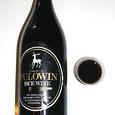
¾ cup glutinous rice wine
3 - 4” knob fresh ginger
4 slices fresh ginger
1½ tablespoons sugar
5 tablespoons light soy sauce
• Clean the chicken, and remove skin and excess fat.
• Taking the big knob of ginger, cut it into several medium pieces, bruise them with the sides of a cleaver or a pestle, then squeeze out the juices. Discard the root and reserve the juice.
• In a completely dry, non-stick wok or large non-stick skillet, melt the sugar. Resist the urge to stir the sugar ; simply leave it to melt completely, on low heat, until it is lightly colored.
• Once the sugar has melted, add the light soy sauce, glutinous rice wine, ginger juice and the ginger slices. Stir to mix well, and bring to a rolling boil. [This is important - that the sauce be at a rolling boil before adding the chicken; this seals the meat as soon as it is added, and helps the chicken stay moist and tender.]
• Add the chicken. Let it cook until the meat on the underside has changed color. Flip the chicken pieces over, and cook until the other side has also turned color. Cover the wok and leave to simmer for about 20 minutes (depending on the size of the chicken pieces) or until the chicken is fully cooked through.
• Serve the chicken with gravy on the side. [The sauce will have thickened and developed gorgeously rich flavors by the time the chicken is cooked through.]
Note:
• Some of you may be surprised (then again, you may not be at all) at the amount of rice wine that is used in the recipe, and that this dish was served to us as children. But it is quite safe to do so, I think. The alcohol evaporates completely as the chicken cooks, leaving just a richly and intensely flavored sauce. And really, it is the glutinous rice wine (or rice wine, if you prefer) which gives this dish its distinctive and incredibly delicious flavors.
• The taste of the ginger is fairly subtle, despite the amount of juice used. It works in the background adding a refreshing zip to the chicken and gravy.
• Any leftover sauce is sublime the next day when used to toss with some noodles, rice vermicelli or even pasta! [Recently, I discovered a small bowl of the gravy that had been sitting in the fridge for almost a week. I heated it up and the most incredible aromas emanated throughout the kitchen - - it still tasted fantastic too. I made some dry tossed (kon lo) noodles with it, and topped it with some store-bought foo chow fishballs. Yum! It made for a wonderfully quick, easy and tasty lunch.]
Copyright © 2004 Renee Kho. All Rights Reserved.
Please contact me for permission to copy, publish, distribute or display any of the images or text contained in this article.
12:38 PM in Home Cook: Poultry & Meats | Permalink | Comments (21) | TrackBack
Thursday, October 14, 2025
Yahoo! Picks Shiokadelicious!

A very big thank you to Yahoo! for choosing Shiokadelicious! as its Pick of the Day!
02:12 PM in Crumbs & Tidbits | Permalink | Comments (26) | TrackBack
Tasty “Trash” Un-Burger Burger
It’s amazing what can sometimes be created from leftovers found lying in the fridge. On occasion, simply throwing together a hodge-podge of bits and pieces of food remnants can produce a stunning epicurean experience that may even rival the most well-planned and holistically designed recipe.
That was the case when I made myself a hastily put-together burger lunch. It turned out to be one of the tastiest burgers I’ve had in a long while!
Rummaging around the fridge, I found several pieces of braised beef shin left over from dinner several nights ago, together with the last remaining portion of sautéed, lightly caramelized onions. Then, on the kitchen table, I saw the last two buns from my Hong Kong-style “bolo” bun experiment-gone-wrong the day before. All were food that were waiting to be made useful.
The beef was cooked in the style of the lamb shanks which I have posted about previously. I used almost the exact same recipe to braise whole pieces of beef shin. Only after the beef was cooked to fork tender perfection was it cut into slices of medium thickness, and then served with lots of sautéed onions and delicious gravy.
I usually cook beef shin (ideally, from the fore-limbs, as it is more tender) stew-style, with the meat cut into small chunks before cooking. But once in a while, I like to slow-braise the beef shins whole. This gives a completely different textural result which is wonderful.
The buns were the evidence of my latest kitchen sortie to try and achieve super fluffy and soft buns without the use of bread improver. These buns were nicely soft and very aromatic (the whole family commented on the delicious smells that emanated from the bread box each time it was opened, even one day after the breads were made), but they were not of the Japanese-style cottony soft texture that Asians seemed to adore with a vengeance and which I was trying desperately to achieve. While these buns weren’t what I had intended them to be, they nevertheless made for superb burger buns.
And so, all it took was a few minutes, and these leftover food “trash” became the most delicious “un-burger” burger. I don’t think I could have done much better if I had intentionally set out to make a good burger.
I popped the beef slices into the leftover gravy, and heated them up together on low heat on the stove, until everything was nicely warmed through. In a separate pan, I quickly “freshened up” the onions. Meantime, the buns were halved and popped into the oven toaster for a couple of minutes.
Buns ready. Beef ready. Gravy ready. Onions ready.
A slice of beef went on the bottom half of the bun, and was topped generously with the onions.
Next, a drizzle of the richly flavorful gravy. And it was good to go.
As with most braised meat dishes, the time spent sitting in the fridge meant that the flavors of the beef had intensified and deepened considerably, and were a delight on the palate. I would never have thought that a whole slice of meat would make for a good burger “patty”, but it worked stupendously well. I admit : it was rather un-burger-like, but I really enjoyed having a non-minced-meat burger. I adored the texture - meltingly tender with just enough meaty bite. And the soft, cooked down tendons that were marbled through the meat made everything all the more interesting and tasty, in my opinion.
The onions provided a richly flavorful, slightly sweet counterpoint to the savory beef and gravy.
The marriage of all the different flavors and textures was almost heaven-made; they truly worked well together. It was a most enjoyable burger lunch! So who says you can’t have a gastronomic experience with leftovers?
Copyright © 2004 Renee Kho. All Rights Reserved.
Please contact me for permission to copy, publish, distribute or display any of the images or text contained in this article.
01:13 PM in Home Cook: Sandwiched! | Permalink | Comments (14) | TrackBack
Tuesday, October 12, 2025
Honey, Does My Breath Stink?
This is another one of those homey “non-recipe” dishes that is unspeakably simple and easy, takes no time at all to put together, and yet is incredibly tasty.
I like this recipe quite a lot. The ingredients are basic : just fresh salmon, honey, garlic and light soy sauce; but the final flavors belie the simplicity of the dish’s components.
The key to getting tasty salmon from such pared-down ingredients is of course - as with most other dishes, really - the freshness of the fish. The fresher and better quality the fish, the tastier this will be. I generally like to use freshly-bought salmon, rather than ones thawed from my freezer compartment. Yes, I know. All the salmon sold here in the markets and supermarkets come flash-frozen anyway. But they are thawed before being sold. And when we re-freeze them after getting them home, then defrost them again at a later date, the flavor and texture are somewhat compromised. I mean, they’re still great for a lot of other dishes - and I almost always have batches of salmon filets (one of my favorite fish) in the freezer, and use them for lots of different recipes. But for this particular dish, I would suggest that “fresh” from the supermarket is best - the flavoring ingredients don’t have to work so hard to “neutralize” any fishiness that may be there. Plus, for broiling, the texture of fresh salmon usually works much better.
This salmon uses lots (and I mean lots) of garlic. And therein lies its appeal (unless of course you have a phobia of this aromatic bulb). And no, you do not get stinky breath from eating this. Or at least I haven’t received any complaints thus far.
The flavor combination works, and the overall taste is light and fairly delicate (which may seem surprising, given the amount of garlic used). There is the wonderfully fragrant aroma and subtle sweetness of finely chopped garlic that has been lightly caramelized, mellowed and rounded out by the honey. There is also the nice balance between the sweetness of the honey and the savory tones of the soy sauce.
We usually make extra sauce (which is always in high demand) and drizzle it over the salmon. And it’s gorgeous.
Broiled Honey Garlic Salmon Filets
Serves 4
4 pieces salmon filets
10 cloves garlic - finely chopped *
4 tablespoons honey
3 tablespoons light soy sauce
* I sometimes use up to one whole head of garlic. Feel free to increase or decrease the quantity according to your garlic comfort level.
• Clean the salmon filets and pat dry.
• In a medium bowl, stir together the honey and soy sauce, until the honey is dissolved. Add the finely chopped garlic, and stir to mix.
• Marinade the salmon filets in the honey-soy sauce mixture for about 20-30 minutes.
• Place under the broiler for about 4-6 minutes (for filets with thickness of about ¾ to 1 inch), or until fish is cooked to the desired doneness.
• Serve hot.
We usually like our salmon a touch underdone - where the center still has a hint of translucency. Personally, I find it rather offensive to have to eat over-cooked, dry and coarse-as-tree-bark salmon; preferring instead the juicy, melt-in-the-mouth, unctuous succulence of “just cooked” fish.
And then, every mouthful becomes a sensual and sensuous delight.
Keep in mind that the fish (unless you are using huge, thick slabs of them) will continue to cook a little bit more even after they have been yanked from under the broiler. I tend to find that leaving them under the heat until they are cooked through and fully opaque produces somewhat overdone fish by the time they are served; whilst cooking them only until they are just a tad underdone will produce fish that is “just right” once they’ve been left to rest for a couple of minutes.
But this is all really down to personal preferences, so just do what feels the most comfortable for you.
Variations
As with most home-style dishes, this one is also open to lots of fun and imaginative flavor-experimentation. And I think it beats the standard, rather too tried-and-tasted (albeit tasty) teriyaki option for broiling fish.
Here are a couple of suggestions, but otherwise, just have fun with it.
• Reduce the amount of garlic used, and add a sprinkling of finely grated lemon or orange zest.
• Instead of using garlic, add finely grated ginger and some lemon or orange zest to the honey-soy sauce mixture.
• If a more robust flavor is desired, try adding a touch of hoisin sauce to the garlic-honey-soy sauce combination.
Happy salmon broiling!
Copyright © 2004 Renee Kho. All Rights Reserved.
Please contact me for permission to copy, publish, distribute or display any of the images or text contained in this article.
05:27 PM in Home Cook: Fish & Seafood | Permalink | Comments (18) | TrackBack
Monday, October 11, 2025
Aromatic Convenience
The only reason I’m writing about this is because it has suddenly come to my attention that the sole, solitary post in the “Kitchen Tips” category is starting to feel just a lil’ bit lonely. So, I’ve taken it upon myself to give it a companion.
No. I’m kidding. I just think perhaps some of you may find this useful - - simple and basic though it may be.
Garlic oil and shallot oil are great things to have on perpetual stand-by in the fridge. These are simply either finely chopped garlic or red shallots sautéed in some vegetable oil (I like canola, but any neutral-tasting oil will do - - or, it doesn’t even have to be that ; if you like extra virgin olive oil, feel free to use that too).
The garlic or shallots are sautéed for a few minutes, until they are soft and aromatic, without being browned. Basically, it is just infusing the oil with the flavors and fragrance of the garlic or shallots. The oil, together with the sautéed aromatics, can then be stored in small jars (with air-tight lids, unless you want the rest of the foods in the fridge reeking of garlic or onions) in the refrigerator for weeks, maybe even months (although I’ve never tried that myself ; the batches we make generally gets used up pretty quickly).
The oil, with or without the garlic and shallots, can be used for various things, and are a super-quick, supremely easy way to add instant flavor and aroma to food.
A lot of the time, the family likes to use the oils when cooking instant noodles (or cup noodles, as they are known in some parts of the world). We hardly ever use the packaged oil that comes with the instant noodles, preferring instead to just drop in a tiny amount of these home-prepared aromatic oils. Whether cooked dry or in soup, instant noodles are instantly given an fragrant fillip and are lifted up a notch with just a small teaspoonful of the sautéed garlic or shallots and a little bit of the fragrant oil.
The oils are great too for preparing kon lo (dry tossed) noodles. Or, if you like, use them as a base for a salad dressing. They can also be used to toss wok-wilted or blanched vegetables.
Garlic or shallot aromatic oil. It’s a good thing.
Copyright © 2004 Renee Kho. All Rights Reserved.
Please contact me for permission to copy, publish, distribute or display any of the images or text contained in this article.
06:35 PM in Kitchen Tips | Permalink | Comments (7) | TrackBack
Choco-Therapy
This was my lunch.
It was a mad, mad day. Rushing from appointment to appointment… phonecalls… emails… faxes… heavy traffic… scarce parking lots… frayed nerves… diminished levels of patience…
And… low blood-sugar levels. There just hadn’t been time for breakfast… or lunch for that matter.
And so by 3pm, Ms Stomach refused to be cold-shouldered any further. She grumbled, rumbled and growled - - all petulant at having been ignored for the large part of the day. How dare she be deprived of sustenance! Enough was enough. She wanted compensation. She demanded a windfall of a sugar-rush to make up for the hours of deprivation.
I obliged with the first thing that crossed our path…
… a big chocolat noir fourre au praline (dark chocolate rocher praline).
We are talking about a seriously large praline. It is about 4 cm in diameter and height (or, if you prefer working in inches - that’s over 1½ inches). Certainly not your average-sized praline, that’s for sure.
It is a rich, decadent pairing of dark chocolate and hazelnuts.
A thin layer of smooth dark chocolate surrounds a soft, luscious hazelnut praline center.
It is luxuriously aromatic… richly smooth… decadently rich…
And… sugar-high-inducingly sweet.
I normally prefer a less sweet - ideally bittersweet - dark chocolate praline. But hunger does funny things to one’s sense of discernment. And guess what? I had not one, not even two… but three of these babies! Yes, I’m a glutton. I admit it. And especially so when it comes to all things chocolate.
These pralines from Carrefour are pretty good - - not stupendously great, but when starving and in desperate need of a rush of sugar, they sure hit the spot. And if you eat three at one go, they also cure all desire for chocolate (even in an unrepentant chocolate “addict” like yours truly) for, oh, probably at least 48 hours or so.
Still, there is nothing quite like chocolate to chase away all those stress demons. 
Maybe you've noticed : the blog updates have been rather non-existent the last couple of weeks. My apologies. But Life (yes, that thing called “real life” which intrudes rudely into my virtual world from time to time) has been crazily hectic, albeit also fascinatingly interesting and attention-absorbingly exciting (not that food-blogging isn’t all those things too, of course).
Diversions aside, there have been cooking and eating happening as well - - naturally. And so hopefully - - fingers crossed - - in between catching up on some sleep, I’ll get my act together, and have some of those posts up in the next couple of weeks. 
Copyright © 2004 Renee Kho. All Rights Reserved.
Please contact me for permission to copy, publish, distribute or display any of the images or text contained in this article.
06:08 PM in Snack Attack! | Permalink | Comments (17) | TrackBack